Cards & Components
Appendix: every face of every card, tile and token in Railways of the Lost Atlas and Landmarks of the Lost Atlas — map and track tiles, charters, certificates, trains, money, Landmarks, events — with what it does.
Every distinct face, pictured from the publisher’s rulebooks (base rulebook pp. 2–3, Landmarks rulebook pp. 2–3); all train faces are from the base game’s official Tabletop Simulator mod. Each entry says what it does and where the rules explain it. Copies that differ only in the decorative road art are one face here, with the number pictured in the rulebook. Faces marked check against the physical component have small print the rulebook pictures are too small to read with certainty.
Boards
Boards and trackers
| Component | What it does |
|---|
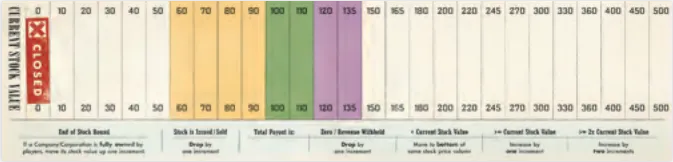 | Stock track — share prices; the order of tokens sets the operating order. A round-end rise for full ownership requires every share to be in players’ hands, with none in the treasury or bank pool (FAQ). Stock track |
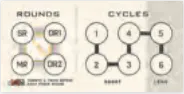 | Round/cycle tracker and its 2 tokens — SR, OR1, OR2, MR and the cycle. The cycle |
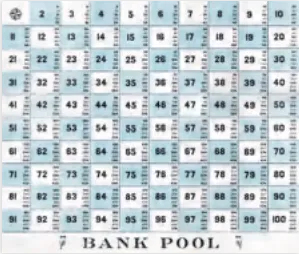 | Earnings per Share chart — each company’s last payout per share; the bank pool sits beside it. Read values in 10% increments for every company; a Minor share takes twice that amount (FAQ). Payout |
 | Priority Player marker — starts the next Stock Round. End of the Stock Round |
Metropolitan Transit Department
[Landmarks] From Landmarks of the Lost Atlas.
| Component | What it does |
|---|
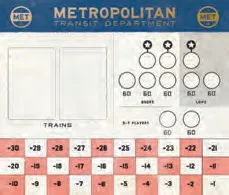 | Metropolitan board — its trains, hub spaces and negative earnings track. Shareholders act in order, finishing allowed tile placements and then a hub before the next shareholder; with two trains it runs two separate routes (FAQ, FAQ). Metropolitan |
 | 21 Metropolitan shares — single shares only; 3 per player in play. If every player owns a share, all shareholders act (FAQ); the Metropolitan also works with base variants such as Bank Break (FAQ). Stock Rounds |
 | 12 Metropolitan hubs. Entering play |
Cards
Minor company charters
12 Minors. Every charter has the treasury on the left, trains on the right and the ability printed at the bottom. An auction is for the right to choose among available Minors; the winner chooses after bidding (FAQ). A new Minor may skip its leadoff train and buy one in the regular train step later that turn (FAQ). The Companies
| Charter | Ability |
|---|
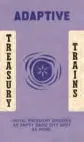 |  Adaptive — Chooses its home at launch. A valid empty basic-city spot is an empty city space, not a hex already upgraded to a different type (FAQ). Not in the Short Game. |
 |  Agricultural — A yellow tile after its upgrade. |
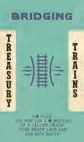 |  Bridging — Five bridge tiles for water. Other companies may connect to track on a bridge it laid (FAQ). Not in the Short Game. |
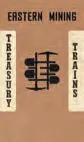 |  Eastern Mining — Starts on the two-stop mine tile; when upgraded, the tile may be rotated, subject to normal track-connection rules (FAQ). |
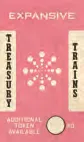 |  Expansive — Its charter adds a second hub that costs 40; a Minor otherwise has only its free home hub (FAQ). A company places at most one hub per Operating Round (FAQ). |
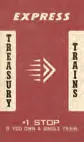 |  Express — +1 stop while it owns one train. |
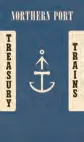 |  Northern Port — Starts on the port tile; a leg pointing off the map does not prevent upgrading if the other connections remain legal (FAQ). |
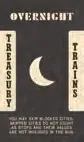 |  Overnight — May pass through cities full of other companies’ hubs, but cannot skip the same blocked city twice on one route (FAQ). Not in the Short Game. |
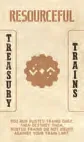 |  Resourceful — Rusted trains run one more time on Resourceful’s next turn; they still occupy train slots when the rusting train is bought (FAQ). |
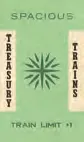 |  Spacious — One extra train slot. Not in the Short Game. |
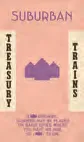 |  Suburban — Two tokens add 10 each on reachable basic cities during its Operating Round. Its own or its Major’s hubs block placement, but other companies’ hubs do not; placed tokens stay after mergers (FAQ, FAQ). |
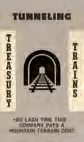 |  Tunneling — Gets 60 immediately after each mountain tile is dug; the money can pay for the next dig in the same track action (FAQ, FAQ). |
Major corporation charters
6 Majors, each charter with two identities (front and back); the rulebook pictures one identity of each, shown here. The hub row has two FREE spaces and two at 60. A newly formed Major takes over its Minors’ trains and does not get a leadoff train (FAQ). Major corporations
| Charter | Corporation |
|---|
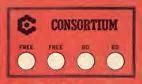 | Consortium |
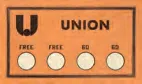 | Union |
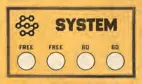 | System |
 | International |
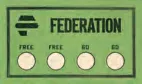 | Federation |
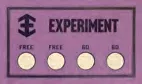 | Experiment |
Stock certificates
Each company has a president’s certificate (2 shares) and single shares: a Minor 1 + 3 singles
(5 shares, 20% of a payout each), a Major 1 + 8 singles (10 shares, 10% each). The silkscreened tokens (hubs, stock and earnings markers) carry the same logo. Only single shares can be sold; a president’s certificate transfers when another player can take over the presidency (FAQ). At game end, a Minor share is worth the stock price and its two-share president’s certificate counts twice (FAQ); issued Minor shares stay in the bank pool when the company merges (FAQ). Buying and selling shares
| Certificates | What it is |
|---|
  | Adaptive (Minor) — president’s certificate and single share |
  | Agricultural (Minor) — president’s certificate and single share |
  | Bridging (Minor) — president’s certificate and single share |
  | Eastern Mining (Minor) — president’s certificate and single share |
  | Expansive (Minor) — president’s certificate and single share |
  | Express (Minor) — president’s certificate and single share |
  | Northern Port (Minor) — president’s certificate and single share |
  | Overnight (Minor) — president’s certificate and single share |
  | Resourceful (Minor) — president’s certificate and single share |
  | Spacious (Minor) — president’s certificate and single share |
  | Suburban (Minor) — president’s certificate and single share |
  | Tunneling (Minor) — president’s certificate and single share |
  | Consortium (Major) — president’s certificate and single share |
  | Union (Major) — president’s certificate and single share |
  | System (Major) — president’s certificate and single share |
  | International (Major) — president’s certificate and single share |
  | Federation (Major) — president’s certificate and single share |
  | Experiment (Major) — president’s certificate and single share |
Trains
30 train cards, sorted into one stack cheapest first. The number is the stops it counts, top right the price, at the bottom what rusts it. A train can run a local with one stop. Companies may buy as many trains as room and cash allow, but must have a train at turn end; they cannot discard a train just to free a slot. Trade-ins keep the train count the same, and a purchase that lowers the limit may force one into the bank pool (FAQ, FAQ, FAQ, FAQ, FAQ, FAQ). Train phases and rust
| Card | What it does |
|---|
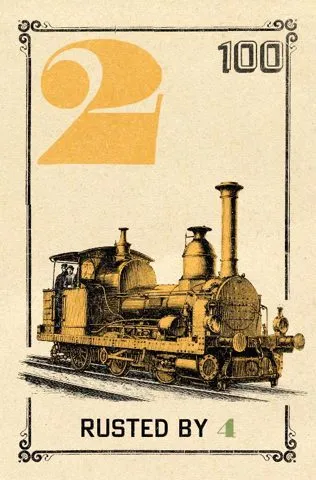 | 2-train — Yellow, 100. Rusted by the first 4-train. Exporting one removes all remaining 2-trains; other exports remove only one card (FAQ). |
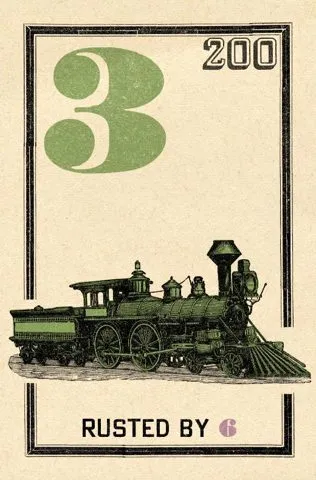 | 3-train — Green, 200; the first begins the green phase and rusts under the first 6-train. Four or more players use the extra card by default; leave it out only for a harsher train rush (FAQ). |
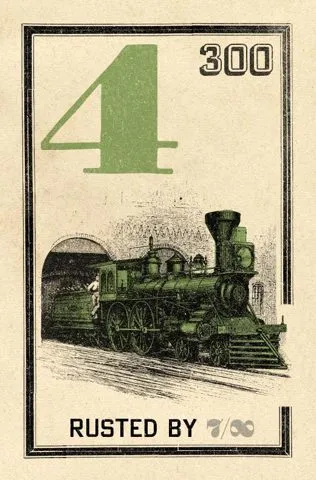 | 4-train — Green, 300. Rusted by the first 7/∞-train; the first one rusts all 2-trains. It can be traded for the first infinity train before a 7 has been bought, even though the trade rusts the 4-trains (FAQ). |
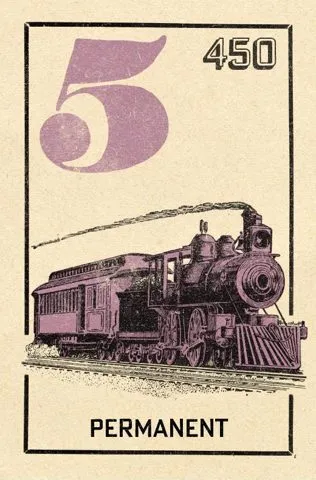 | 5-train — Purple, 450, permanent — the first one starts the purple phase. |
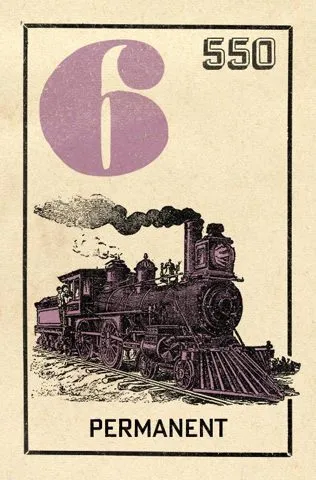 | 6-train — Purple, 550, permanent; the first one rusts all 3-trains. Four or more players use the extra card by default; leave it out only for a harsher train rush (FAQ). |
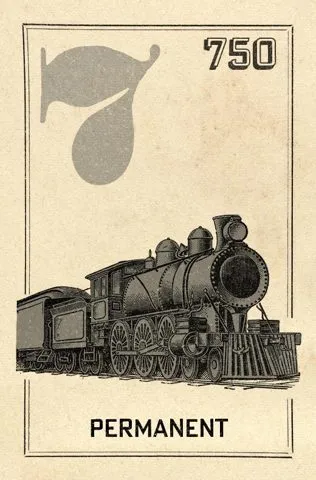 | 7-train — Grey, 750, permanent — the first one starts the grey phase and rusts all 4-trains. |
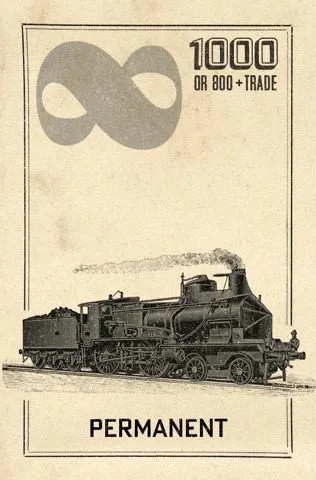 | ∞-train — 1,000, or 800 plus a trade-in; permanent. This is the reverse face of the 7-train, not a separate stack (FAQ). |
Distant Destination revenue cards
One card sets the value of every Distant Destination in the yellow / green / purple / grey phase. The card supplies revenue by phase; it does not change which spaces count as stops.
Building the map, Different Distant Destinations
| Card | What it is |
|---|
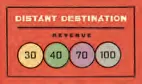 | 30 / 40 / 70 / 100 — Recommended for new players. |
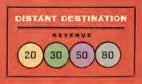 | 20 / 30 / 50 / 80 |
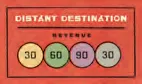 | 30 / 60 / 90 / 30 — Falls back in the grey phase. |
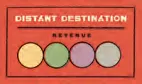 | blank — Write your own values. |
Reminder cards and player aids
| Card | What it is for |
|---|
 | Reminder under the first 3-train — what changes when it is bought (green phase). Double-sided; the back is not pictured in the rulebook, and the small print should be checked against the physical component. The separate extra 3-train is optional in games with four or more players (FAQ). Phases |
 | Reminder under the first 4-train — the 2-trains rust and the train limits change. |
 | Reminder under the first 5-train — the purple phase begins: new tiles and train limits. |
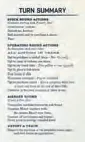 | Turn summary — the round sequence and actions. |
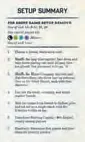 | Setup summary. |
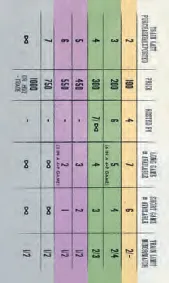 | Reference tables (trains, limits, prices). The first-printing 900 divided by player count is corrected: starting money is 225 for four players and 180 for five (FAQ). |
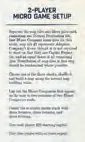 | 2-player Micro Game setup and its map-tile table (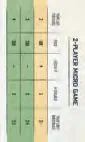 ); all track tiles remain available (FAQ). Micro games |
 | 3-player Micro Game setup and its map-tile table ( ). |
 | Hostile Mergers variant. Hostile mergers |
 | Headquarters variant. Headquarters |
New companies
[Landmarks] From Landmarks of the Lost Atlas.
| Component | What it is |
|---|
 |  Circus — Once per Operating Round, one train may spend an extra stop to count one city twice. This also works on a Northern Port half or an Eastern Mining stop (FAQ, FAQ). To double its hub city and reach the Cliff, the train needs stops for both plus one extra; a 2-train can only double its home (FAQ). Pullman Car and Circus add the city value separately, for three counts total (FAQ). Circus |
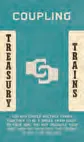 |  Coupling — joins trains for a route; the cards stay separate and coupling markers reset after the Operating Round (FAQ). It can combine three or more numbered trains, but cannot split an infinity train (FAQ). Coupling |
 |  Manufacturing — starts with its own permanent 2-train. Manufacturing |
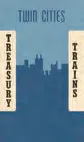 |  Twin Cities — two homes, two hubs. Twin Cities |
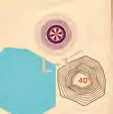 | Tile L-1 — Circus home, a mountain and water. |
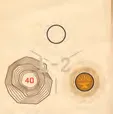 | Tile L-2 — Manufacturing home, a mountain and a basic city. |
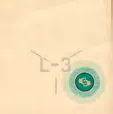 | Tile L-3 — Coupling home and blank hexes. |
 | Twin Cities home tile (two-hex). |
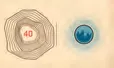 | Second Twin Cities home tile — with a mountain. |
 | Twin Cities project tile — places both Twin Cities homes during map building. |
 | Manufacturing 2-train — permanent, worth nothing, cannot be traded. |
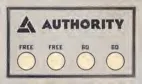 | Authority — new Major (one identity pictured). |
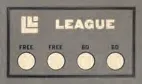 | League — new Major (one identity pictured). |
 | 6 extra Major hubs — for a Twin Cities + Expansive merger. |
| Certificates | What it is |
|---|
  | Circus (Minor) — president’s certificate and single share |
  | Coupling (Minor) — president’s certificate and single share |
  | Manufacturing (Minor) — president’s certificate and single share |
  | Twin Cities (Minor) — president’s certificate and single share |
  | Authority (Major) — president’s certificate and single share |
  | League (Major) — president’s certificate and single share |
Direct-to-Major partner charters
[Landmarks] 5 blank partner charters, two identities each (the rulebook pictures one side). They turn a Minor
into a Corporation. Direct-to-Major
| Charter | Identity |
|---|
 | Big |
 | Friendly Local |
 | Regional |
 | Independent |
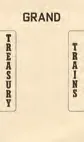 | Grand |
Event cards
[Landmarks] 14 event cards; each changes a rule for one cycle. Events
| Card | What it does |
|---|
 | CEOs Get Rich! (Town Chronicle) — Companies may pay their president 20 each Operating Round. |
 | The Future Is Here! (Town Chronicle) — Upgrades may run ahead of the phase. |
 | Ghost Towns Razed! (Town Chronicle) — Empty basic cities may be built over with plain track. |
 | Overtime! (Town Chronicle) — A third Operating Round. |
 | Rapid Growth (Town Chronicle) — Launch the first or second Minor of a column. |
 | Rural Expansion (Town Chronicle) — Extra yellow tiles at 20 each. |
 | Stock Bonanza! (Town Chronicle) — Issuing does not drop the price. |
 | Corporate Subsidies (New City Herald) — New companies get 50% of the bid extra. |
 | Merger Mania! (New City Herald) — An extra Merger Round between OR1 and OR2. |
 | Overtime! (New City Herald) — A third Operating Round. |
 | Unions Win! (New City Herald) — Companies may half-pay. |
 | Train Auction Today (New City Herald) — Companies bid secretly for the Pullman Car. |
 | Tycoons Rejoice (New City Herald) — Presidents may own up to 80%. |
 | Record Gains! (New City Herald) — A triple payout moves the price up three steps. |
Trains, tiles and cards
[Landmarks] From Landmarks of the Lost Atlas.
| Component | What it is for |
|---|
 | Extra 7/∞ train for the base stack. Trains |
 | 4-train marked for 6+ players — 6–7 player mode. Six and seven players |
 | 2-train marked for 6+ players (two cards). |
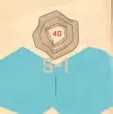 | S-1 — two water hexes and a mountain. S-1 and S-2 |
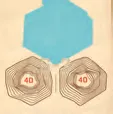 | S-2 — water and two mountains. |
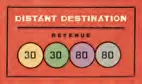 | Distant Destination card 30 / 30 / 80 / 80. New revenues |
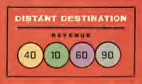 | Distant Destination card 40 / 10 / 60 / 90. |
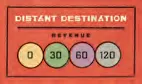 | Distant Destination card 0 / 30 / 60 / 120. |
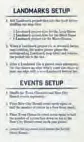 | Player aid: Landmarks and Events setup. Setup changes |
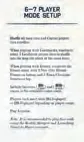 | Player aid: 6–7 player setup. |
Tiles
Map tiles
33 tri-hex map tiles build the map. During map building no tile may touch a black border hex, but printed track may point off the map or into water; if a Minor home has no room to grow, use single blank hexes or agree to move that map tile (FAQ, FAQ). Building the map ·
Map legend:  blank ·
 water ·
 basic city ·
 company home ·
 mountain (40) ·
 Distant Destination ·
 border.
| Tile | What is on it |
|---|
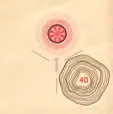 | Tile 1 — Expansive home, a mountain, a blank hex |
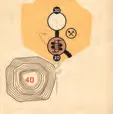 | Tile 2 — Eastern Mining home. Its linked stops make a guaranteed two-stop route from its first turn; only the home needs a hub, and the isolated stop cannot connect to a Park (FAQ). The printed stop values are 30 and 20 — check against the physical component. |
 | Tile 3 — Agricultural home, a basic city, a blank hex |
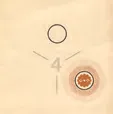 | Tile 4 — Resourceful home, a basic city, a blank hex |
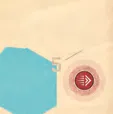 | Tile 5 — Express home, water, a blank hex |
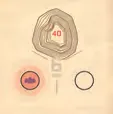 | Tile 6 — Suburban home, a mountain, a basic city |
 | Tile 7 — Northern Port home. The tile has two separate half-cities; a route must include its hub and cannot exit through the other half. The outward leg does not block an upgrade (FAQ, FAQ). |
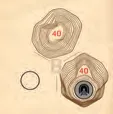 | Tile 8 — Tunneling home on a mountain, a second mountain, a basic city |
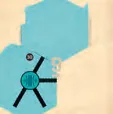 | Tile 9 — Bridging home: a printed city among water, with more water — not in the Short Game |
 | Tile 10 — Overnight home, water, a blank hex — not in the Short Game |
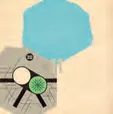 | Tile 11 — Spacious home: a printed city tile, with water — not in the Short Game |
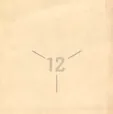 | Tile 12 — Three blank hexes (two copies; one is removed in the Short Game) |
 | Tile 13 — Two water hexes and a blank hex (two copies; one is removed in the Short Game) |
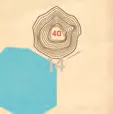 | Tile 14 — A mountain, water and a blank hex (two copies; one is removed in the Short Game) |
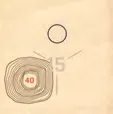 | Tile 15 — A mountain, a basic city and a blank hex (pictured twice) |
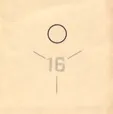 | Tile 16 — A basic city and two blank hexes |
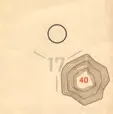 | Tile 17 — A basic city, a mountain and a blank hex |
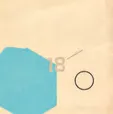 | Tile 18 — Water, a basic city and a blank hex |
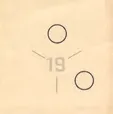 | Tile 19 — Two basic cities and a blank hex |
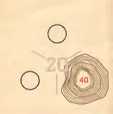 | Tile 20 — Two basic cities and a mountain |
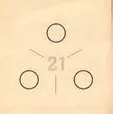 | Tile 21 — Three basic cities — stands for Adaptive in randomized setups; not in the Short Game |
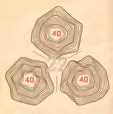 | Tile 22 — Three mountains |
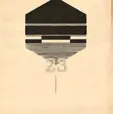 | Tile 23 — A border hex and two blank hexes |
 | Tile 24 — A border hex, water and a blank hex |
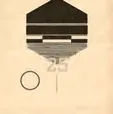 | Tile 25 — A border hex, a basic city and a blank hex |
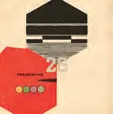 | Tile 26 — A border hex and a Distant Destination — not in the Short Game |
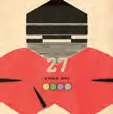 | Tile 27 — A border hex and a two-hex Distant Destination |
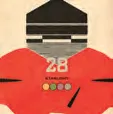 | Tile 28 — A border hex and a two-hex Distant Destination |
 | Capital City project tile (3; one is removed in the Short Game): when drawn, upgrade a basic city hex to a Capital with an overlay. The matching Capital symbol must already be on that hex; a symbol tile cannot be placed on a plain hex (FAQ). |
 | Capital City overlay (3): the  Capital city hex. |
 | 12 double-sided single hexes — blank, mountain, water and city faces — to give late homes room or build custom maps. Custom maps |
 | City face. |
 | Mountain face (40). |
 | Water face. |
Track tiles
135 track tiles; only the colours of the current phase may be laid, and an upgrade must keep every existing connection. All track tiles remain available in Micro Games; only the map tiles are divided into piles, and tiles that add a Capital, mine or port must match a hex bearing that feature (FAQ, FAQ). Laying track
| Tile | What it is |
|---|
 | Yellow gentle curve · ×12 |
 | Yellow straight · ×13 |
 | Yellow sharp curve · ×6 |
 | Yellow city (20), straight through · ×7 |
 | Yellow city (20), gentle bend · ×7 |
 | Yellow city (20), sharp bend · ×5 |
 | Yellow capital (40), straight through · ×1 |
 | Yellow capital (40), gentle bend · ×1 |
 | Yellow capital (40), sharp bend · ×1 |
 | Green fork: straight with a gentle curve · ×4 |
 | Green fork: straight with a gentle curve, other hand · ×4 |
 | Green fork: two gentle curves · ×2 |
 | Green fork: straight with a sharp curve · ×1 |
 | Green fork: straight with a sharp curve, other hand · ×1 |
 | Green gentle curve and a separate sharp curve · ×1 |
 | Green gentle curve and sharp curve, joined · ×1 |
 | Green gentle curve and sharp curve, joined, other hand · ×1 |
 | Green two curves joined · ×1 |
 | Green two curves joined, other hand · ×1 |
 | Green two sharp curves sharing an edge · ×1 |
 | Green two separate sharp curves · ×1 |
 | Green two separate gentle curves · ×1 |
 | Green two straights crossing · ×1 |
 | Green two gentle curves crossing · ×1 |
 | Green straight crossed by a gentle curve · ×1 |
 | Green two-spot city (30) with five exits — exits vary between copies; check against the physical component · ×13 |
 | Green two-spot city (30) with four exits · ×among the above |
 | Green capital (50), two spots · ×5 |
 | Green  eastern mining upgrade: two linked stops (50 and 30 — check against the physical component) · ×1. The tile’s orientation may change when upgraded if track connections remain legal (FAQ). |
 | Green  northern port upgrade: two half-cities (values: check against the physical component) · ×1. Its edge-facing leg does not prevent upgrading when the other connections are preserved (FAQ). |
 | Purple junction of three or four track ends — exits as pictured · ×1 |
 | Purple junction of three or four track ends — exits as pictured · ×1 |
 | Purple junction of three or four track ends — exits as pictured · ×1 |
 | Purple junction of three or four track ends — exits as pictured · ×1 |
 | Purple junction of three or four track ends — exits as pictured · ×1 |
 | Purple junction of three or four track ends — exits as pictured · ×1 |
 | Purple junction of three or four track ends — exits as pictured · ×1 |
 | Purple junction of three or four track ends — exits as pictured · ×1 |
 | Purple junction of three or four track ends — exits as pictured · ×1 |
 | Purple junction of three or four track ends — exits as pictured · ×1 |
 | Purple junction of three or four track ends — exits as pictured · ×1 |
 | Purple two-spot city (40) · ×3 |
 | Purple capital, three spots (60) · ×1 |
 | Purple mine upgrade, three spots (values: check against the physical component) · ×1 |
 | Purple port upgrade, four spots (80) · ×1 |
 | Grey two-spot city (50) · ×3 |
 | Grey capital, three spots (70; the starred stop’s value remains to check against the physical component) · ×1 |
 | Grey mine upgrade, three spots (printed values 70 and 50; which stop uses which value remains to check against the physical component) · ×1 |
 | Blue bridging bridge, straight (2 in the game) — on water only, never upgraded. bridging · ×1 |
 | Blue bridge, gentle curve (2) · ×1 |
 | Blue bridge, sharp curve (1) · ×1 |
Landmark tiles
[Landmarks] 14 Landmark tiles and 11 Landmark project tiles (one per Landmark; the Park project places both
Parks, the Mirage project the Mirage and both Deserts). The Landmarks
| Tiles | What it does |
|---|
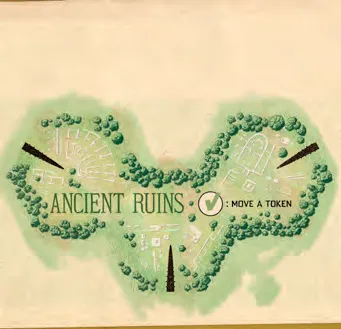 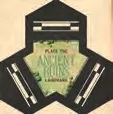 | Ancient Ruins — No revenue. After route revenue is worked out, the company that used it may move one of its own hubs to an available spot reachable from its old location; it cannot move an opponent’s hub (FAQ). |
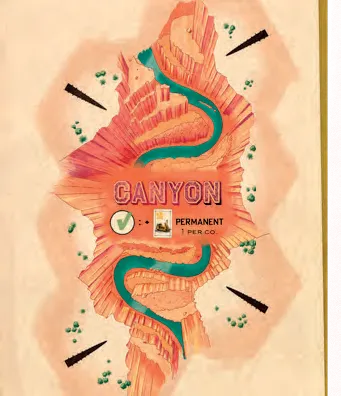  | Canyon — No revenue. After the first 4-train is bought or exported, the company that runs there takes a free permanent rusted 2-train after payout; it uses a train slot. |
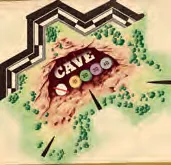 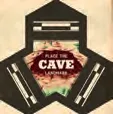 | Cave — Not a stop. Adds phase revenue shown on the tile, but the route must start or end there; check its exact values against the physical component. |
 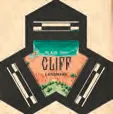 | Cliff — After routes are set and before payout, sell the train that visited it for half price, once per company per Operating Round. Several routes can visit, but only one train is sold and it returns to the bank pool; Coupling changes which card is sold (FAQ, FAQ, FAQ). |
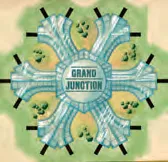 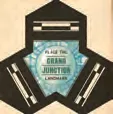 | Grand Junction — Not a stop. Each track section connects to every other, but a route can use any section only once; different routes may cross it. |
 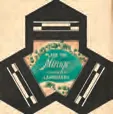 | Mirage — Stop worth 60 once per company per round; after trains run, it swaps with Odd or Even Desert based on the train’s number (infinity is even). It is the route’s end, not a pass-through hex (FAQ). |
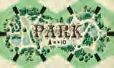  | Park — Not a stop. Each connected neighboring city earns +10 (not Distant Destinations); more than one track connection to the same Park gives no extra bonus. A tree marker tracks an eligible city (FAQ). |
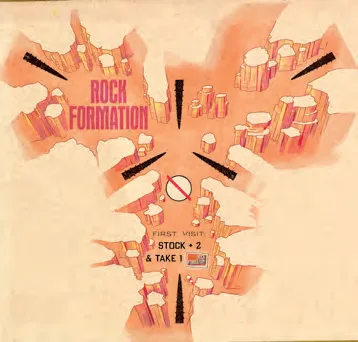 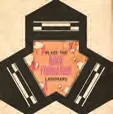 | Rock Formation — A company without its postcard gains two stock-price steps after revenue when this is the start or end of its route; it then takes the postcard (FAQ). |
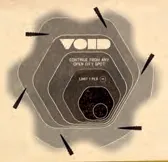 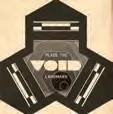 | Void — Once per Operating Round, a train may emerge at an open city, which counts as a stop; your hub must still connect to the Void by track (FAQ, FAQ). |
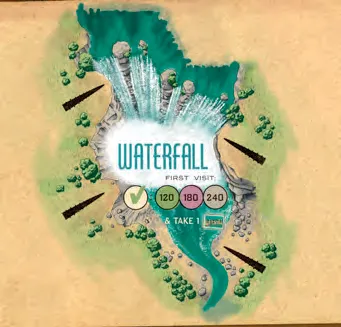  | Waterfall — A company without its Waterfall postcard earns the printed phase amount (120, 180 or 240) when it visits, then takes the postcard; it cannot earn it again. |
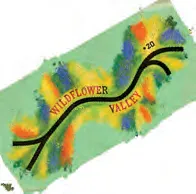  | Wildflower Valley — Not a stop. Adds 20 only to a route with at least one stop before and one stop after the Valley. |
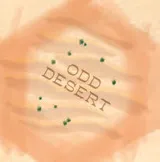 | Odd Desert — The Mirage moves here after a route runs it with an odd-numbered train (or odd total on coupled trains). |
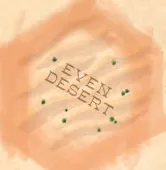 | Even Desert — The Mirage moves here after an even-numbered train; infinity counts as even. |
Tokens & pieces
Money
285 money cards in six values. Player money and company money
Markers
| Marker | What it is for |
|---|
 | Suburban’s two tokens add 10 each on reachable basic cities during its Operating Round. Its own or its Major’s hubs block placement, but other companies’ hubs do not; placed tokens stay after mergers (FAQ, FAQ). Suburban |
 | Marks Express’s train while it owns exactly one train; that train counts one extra stop. Express |
Landmark postcards and markers
[Landmarks] From Landmarks of the Lost Atlas.
| Component | What it does |
|---|
 | 12 Rock Formation postcards — a company that used the Rock Formation. |
 | 12 Waterfall postcards — a company that used the Waterfall. |
 | 16 Park markers — a city earning a Park bonus. |
 | 4 blank markers — cover a home logo left by an Ancient Ruins move. |
 | 19 Distant Destination tile markers — pair a revenue card with its tile. |
  | Printed on each Landmark: counts as a stop, or does not. |
Icons
To be added.


