Actions
Galileo Galilei's actions: observing Major Objects and constellations with your dice, gaining dice, lecturing, upgrading, spotting and using comets, and the twelve faces of the Action tiles.
Observe
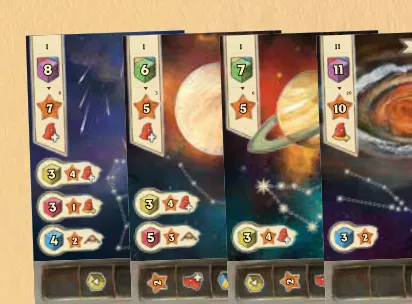
 Observe — observe one Major Object or up to two constellations on the
Discovery cards on the board, paying with your dice. Each Discovery card shows one Major Object
and one constellation with one to three observation spots.
Observation dice
Your dice are your observing time: the colour is the light spectrum and the value the time spent. Dice are not rolled — they start at 1 and actions raise them.
- You may hold four dice at most, and three of one colour at most (the “MAX 3” reminder).
- A new die always arrives at value 1. If you already hold four, you may swap one of yours for it.
- Dice spent on an observation go back to the supply; any value above the cost is lost.
Observing a Major Object
A Major Object’s cost is a number in a two-colour icon:  orange (red + yellow),
green (yellow + blue) or purple (red + blue). Spend dice of those two colours, in any
mix, with at least one die of each, whose values add up to the cost.
Then:
- Score the Major Object’s victory points; if the card shows an Inquisitor, take one (Gain an Inquisitor).
- Put the card face up in your library so its reward row stays visible (Library).
- Any Constellation tokens on that card go back to the box.
- Refill the display from the deck.
Observing constellations
A constellation spot costs dice of one colour (red, yellow or blue). You may observe two spots with one action, on the same card or on two cards; resolve the first fully before the second.
- Pay the spot’s cost.
- Cover the spot with your leftmost Constellation token; nobody can observe that spot again.
- Take the spot’s rewards (victory points and icons).
- Take the reward printed under the space the token came from:
| Token | Reward |
|---|---|
| 1st |  1 Quadrant |
| 2nd |  Top card of the deck, face down, into your library |
| 3rd |  Lecture |
| 4th | Top card of the deck, face down |
| 5th |  Persuade |
| 6th | Top card of the deck, face down |
| 7th |  Write 4 (move Book tokens 4 spaces in all) |
After your seventh token you can observe no more constellations.
Gain a die or Lecture
Choose one:
 Gain a die — any colour, value 1 (respecting four dice, three per colour).
- Lecture — move one of your University tokens up one row of its Scale tile
and take the reward printed right of that row. A token at the top can’t climb further
(Subjects and Scale tiles).
Upgrade
 Flip one of your Action tiles to its gold side; it stays where it is. The Upgrade
space holds no tile, so instead of a moving action you take one . Nothing rotates
in Cleanup after an Upgrade.
Spot a comet
 Take your leftmost Comet token from your board and put it on the game board above
the Discovery cards, side 1 up. The 4-Quadrant free
action does the same.
Using comets
When you observe, your comets on the board lower the cost by their value:
- Each comet is used once per turn, and only your own.
- Every comet you use must lower the cost you still owe — you can’t add one the dice already cover. A “2” comet may cover a gap of 1; the spare point is lost.
- You still need at least one die of each colour the object asks for.
- After its first use a comet moves below the cards and flips to 2. After its second use it goes on the Book of Comets in Cleanup.
Moving actions
Each Action tile offers two options, split by a slash; choose one. Icons used:
| Icon | Effect |
|---|---|
   | Raise all your dice of that colour by 1 |
   | Raise all your dice of that colour by 2 |
 /  | Raise any one die by 2 / by 3 |
| Gain a die of any colour |
| Gain a Quadrant |
| Persuade an Inquisitor in your cellar |
| Lecture |
 | Write in your library |
 | Score the points shown |
The Action tiles
Every player has the same six tiles, each with a light basic face and a gold upgraded face. The tile supplies the moving action; choose one of the two options shown on that face.
| Picture | Moving action option |
|---|---|
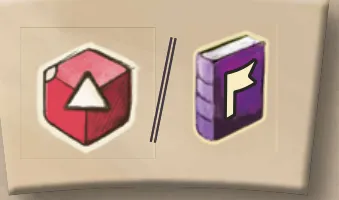 | or |
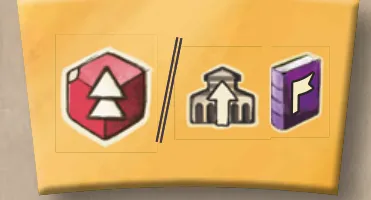 | or + |
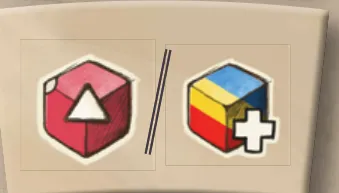 | or |
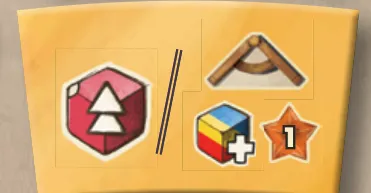 | or + + 1 |
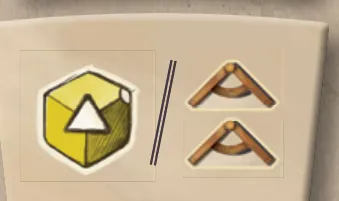 | or 2 |
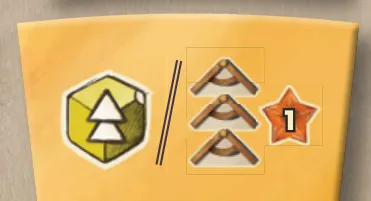 | or 3 + 1 |
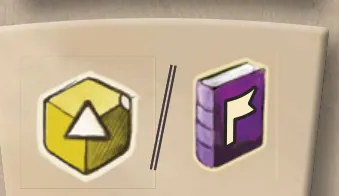 | or |
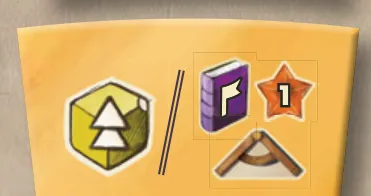 | or + 1 + |
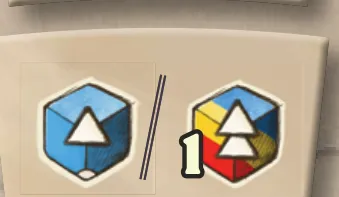 | or |
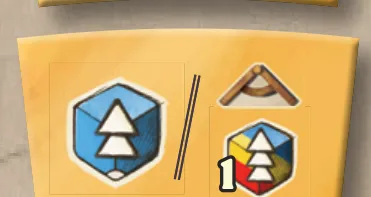 | or + . This increase may be only +1 or +2. FAQ |
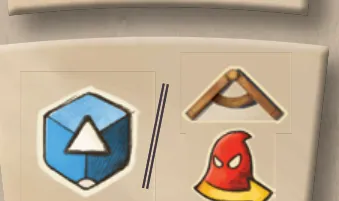 | or + |
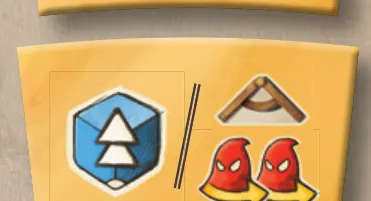 | or + 2 |
[Moon] Isaac Newton and Maria Cunitz play with their own six tiles (Luna characters).