Cards & Components
Luthier appendix: every component with its picture — all patrons and their powers, every instrument, the performance, repair, market and specialty worker cards, the 18 goals, 15 awards, family tiles, solo cards and the icons.
Boards
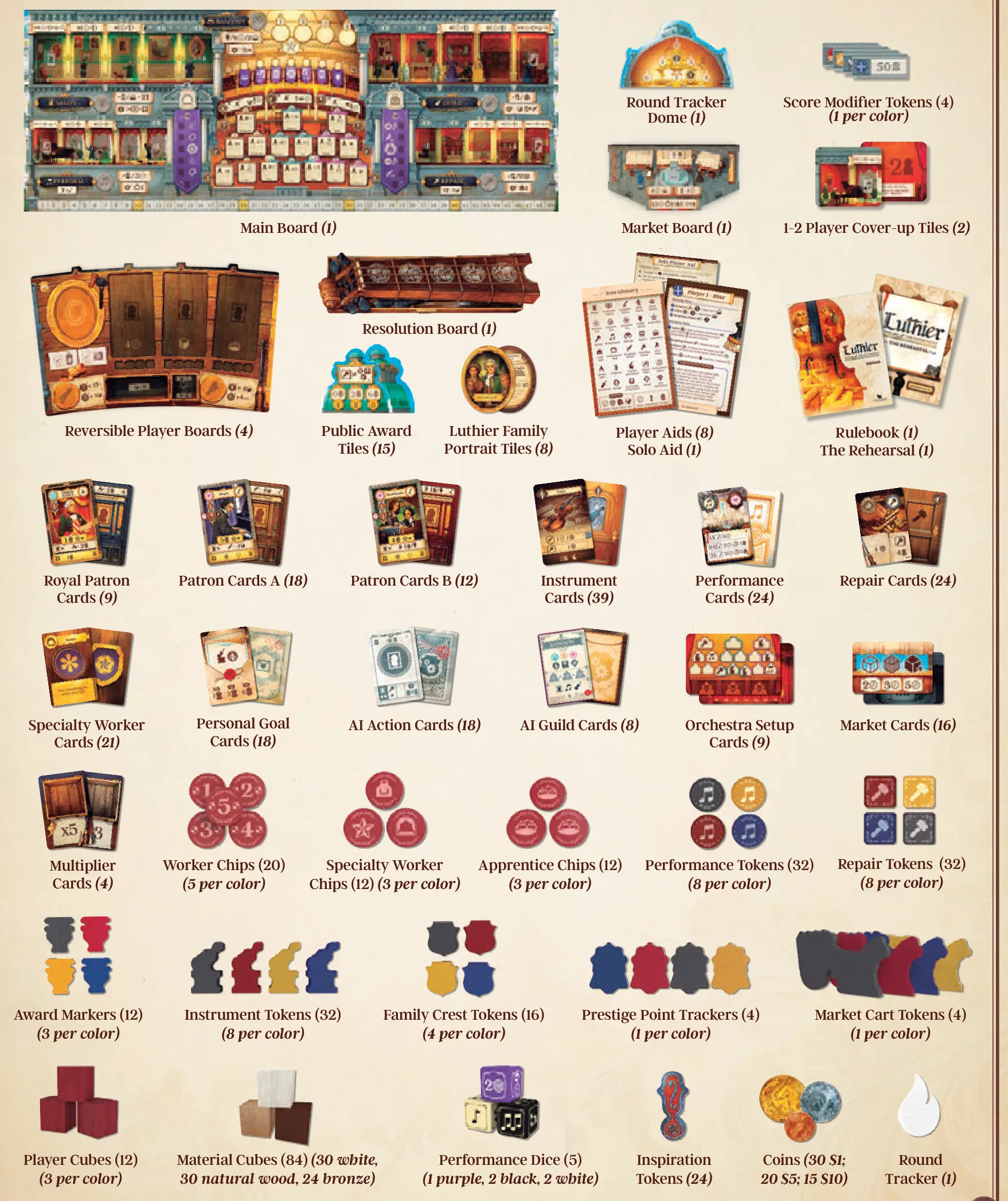
Boards and pieces
| Picture | Description |
|---|---|
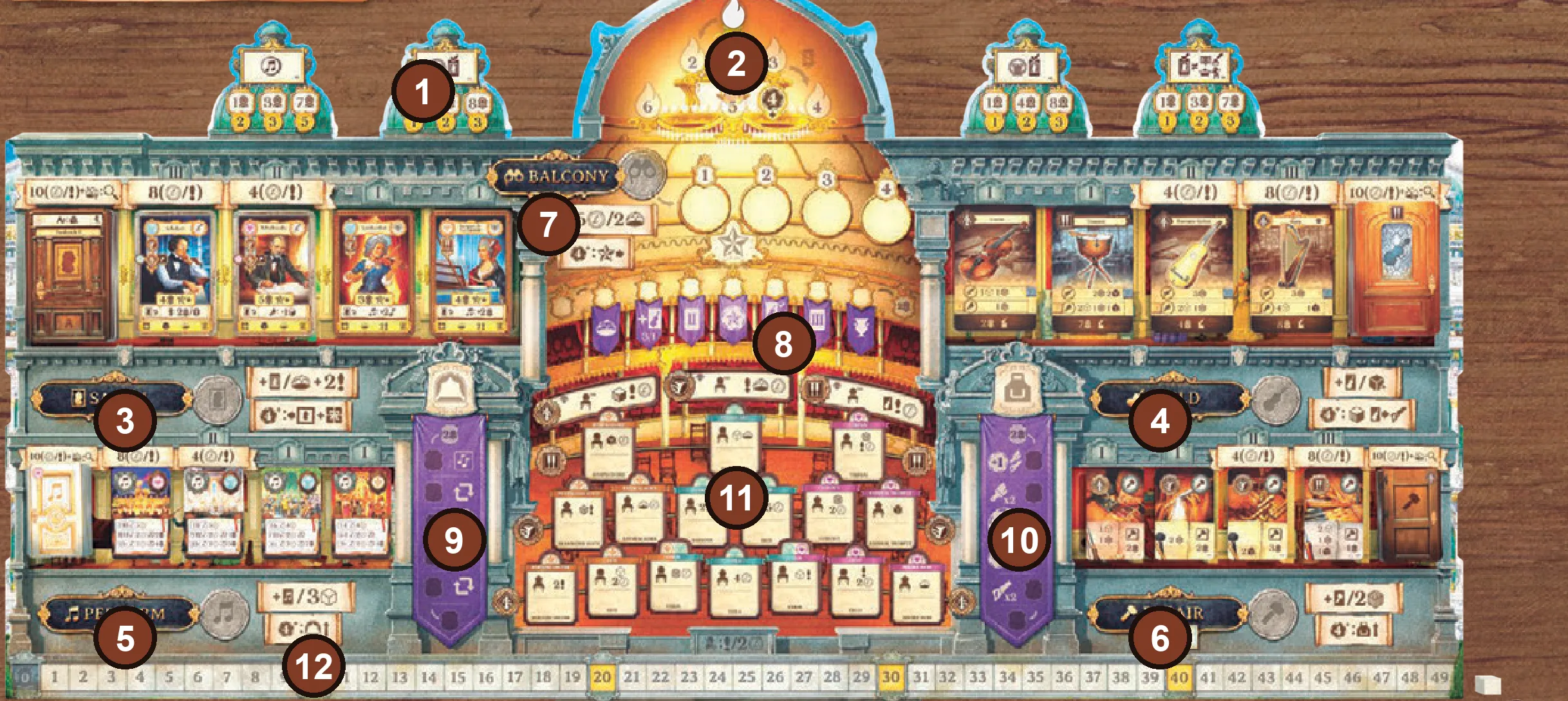 | Count: 1 main board; What it is for: Locations, tracks, Orchestra, awards, score. The Reputation track’s award space gives an optional public award when reached; later steps give 2 prestige and another optional award chance (FAQ, FAQ). Locations |
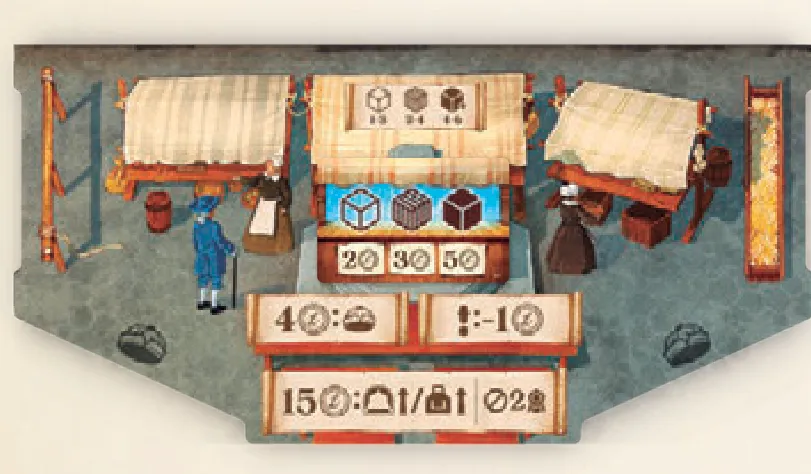 | Count: 1 Market board, 16 market cards; What it is for: Material prices by round; apprentices wait here. Market |
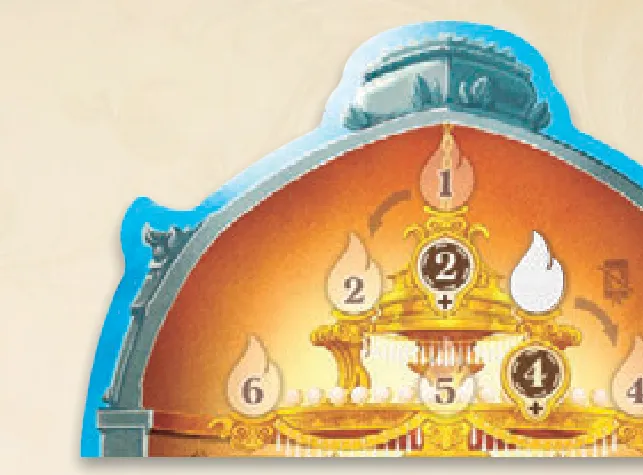 | Count: 1 dome, 1 round tracker; What it is for: Rounds 1–6. After round 6, go straight to end-game scoring without another end-of-round step (FAQ). |
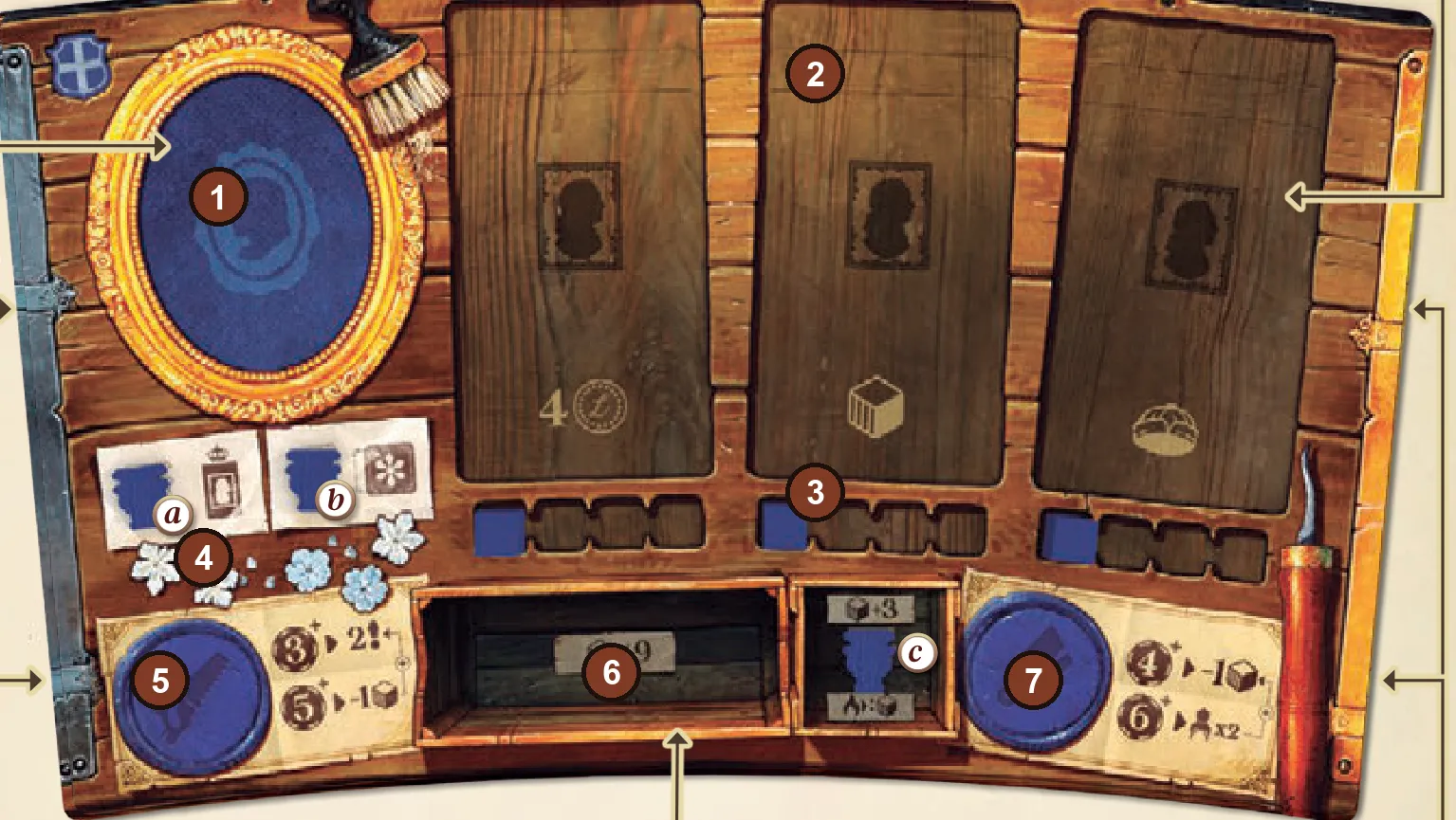 | Count: 4 reversible workbench boards; What it is for: Yours; the reverse is the solo AI’s board. Workbench |
 | Count: 9 Orchestra setup cards, 2 cover-up tiles; What it is for: Two-player and solo setup: neutral First Chairs and blocked award levels. The Rehearsal needs four seats; with two players, each runs two families, then the game must be reset (FAQ). |
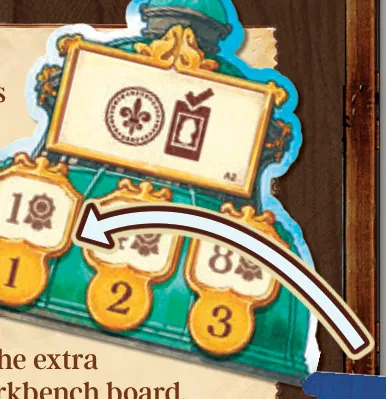 | Count: 15 public award tiles; What it is for: Public awards |
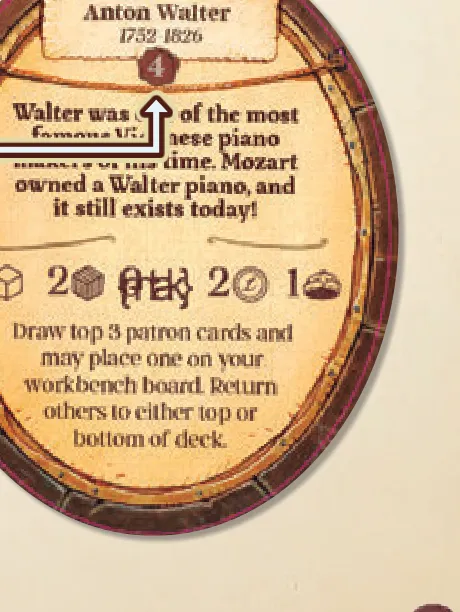 | Count: 8 luthier family tiles; What it is for: Family tiles |
 | Count: 20 worker chips (#1–#5 per colour); What it is for: Your workers. Resolve every worker; if you skip its action or cannot take it, take $2. A skill 4+ bonus comes after the location action, still applies if you take the $2 alternative, and counts apprentices in skill (FAQ, FAQ, FAQ, FAQ). |
 | Count: 12 apprentice chips (3 per colour); What it is for: +1 skill each. Skill bonuses include attached apprentices. A used apprentice returns to the Market after its worker’s action, so another worker may take it later that round (FAQ, FAQ, FAQ). Balcony apprentices also return after their action; only the worker stays to set turn order (FAQ). |
   | Count: 32 each of performance, repair and instrument tokens; What it is for: Orchestra tokens (8 per colour; use substitutes if the supply runs out) (FAQ). |
 | Count: 12 award markers (3 per colour); What it is for: Cover award benefits, then award levels. |
| Count: 16 family crests, 12 cubes, 4 market carts, 4 prestige trackers, 4 score modifier tokens, 12 specialty worker chips; What it is for: Track and turn-order markers, patience cubes, Market visits, score. | |
| Count: 5 performance dice (2 white, 2 black, 1 purple); What it is for: Performing. The Performance track reroll can be used on any die, including purple (FAQ). | |
     | Count: 84 material cubes, 24 inspiration, coins, 4 multiplier cards; What it is for: Resources are unlimited; use multiplier cards or substitutes beyond the pieces provided (FAQ). At game end, each leftover coin, inspiration, material cube, and apprentice counts as one unit; every 10 units score 1 prestige, and leftover cash breaks ties (FAQ). |
| Count: Resolution board, 8 player aids, solo aid; What it is for: Turn keeping and summaries. |
Cards
Patron cards

18 Patron A cards (used in rounds 1–3), 12 Patron B cards (rounds 4–6) and 9 royal patrons. The first column is the power strip from the rulebook’s patron-power page; the same strip shows on the back of the completed card. Several patrons share a power. Requirements can be met in any order; assigned cards stay with their patron, and are discarded if its patience runs out. Incomplete patrons cost no end-game points unless they expire (FAQ, FAQ, FAQ, FAQ). You may complete more than five; tuck extras with their names visible (FAQ). A patience reset gives no immediate gift; the next regular gift comes at the next round start (FAQ). Cards only slide/refill at round end; after round 3 remove only Patron A cards still in the draw deck (FAQ, FAQ).
Noble patrons
 Primary requirement and two secondary ones; money gifts.
| Picture | Description |
|---|---|
 | Patron: Madame de Pompadour (A); Lifetime power: At each round start, collect 1 animal and 1 wood; this gift happens once per round. |
 | Patron: Frederick the Great (A); Lifetime power: At each round start, collect 1 metal; this gift happens once per round. |
 | Patron: Count von Waldstein; Baron van Swieten (A); Lifetime power: At each round start, collect 5 money; this gift happens once per round. |
 | Patron: Ludwig II; Nadezhda von Meck (A); Lifetime power: At each round start, collect 1 apprentice; this gift happens once per round. |
 | Patron: House of Esterházy (B); Lifetime power: At game end, score 1 prestige for each instrument you finished (for example, 3 finished instruments score 3). |
 | Patron: House of Medici (B); Lifetime power: At game end, score 1 prestige for each patron you completed. |
 | Patron: Leopold II (B); Lifetime power: At game end, count one additional First Chair in your total. |
Composer patrons
 Primary requirement and one secondary; gifts of apprentices and materials.
| Picture | Description |
|---|---|
 | Patron: Johann Pachelbel (A); Lifetime power: Your workers get +1 skill at both roughing and finishing benches. |
 | Patron: Antonio Vivaldi (A); Lifetime power: Once on each Repair action, reduce one repair’s cost by 1 material of your choice. |
 | Patron: Joseph Haydn (A); Lifetime power: At the Market, each wood cube costs 1 less; buying two at $4 each costs $6 (FAQ). |
 | Patron: Wolfgang Amadeus Mozart (A); Lifetime power: At the Market, each metal cube costs 1 less (FAQ). Mozart’s secondary requirement shows a misprinted era symbol in first printings; it should be the performance note (FAQ). |
 | Patron: Frédéric Chopin (A); Lifetime power: Once per action, roughing costs 1 material less; if you rough two instruments in one action, only one gets this discount (FAQ). |
 | Patron: Pyotr Ilyich Tchaikovsky (A); Lifetime power: Once on each Finishing action, reduce one instrument’s cost by 1 material. |
 | Patron: George Frideric Handel (B); Lifetime power: At game end, score 1 prestige for each specialty worker you have unlocked. |
 | Patron: Franz Schubert (B); Lifetime power: At game end, each Reputation or skill track you maxed is worth 2 prestige. |
 | Patron: Fanny & Felix Mendelssohn (B); Lifetime power: At game end, score 1 prestige for each public award you claimed. |
 | Patron: Johannes Brahms (B); Lifetime power: End: 1 prestige per your own repair token in the Romantic section (FAQ). |
 | Patron: Johann Sebastian Bach (B); Lifetime power: End: 1 prestige per your own repair token in the Baroque section (FAQ). |
 | Patron: Ludwig van Beethoven (B); Lifetime power: End: 1 prestige per your own repair token in the Classical section (FAQ). |
Performer patrons
 Primary requirement only; gifts of apprentices and inspiration.
| Picture | Description |
|---|---|
 | Patron: Francesca Caccini; Maddalena Lombardini (A); Lifetime power: Add 2 to the result of every performance, before checking its level. |
 | Patron: Élisabeth Jacquet de La Guerre; Clara Schumann (A); Lifetime power: Add 2 prestige to every performance, even a low result. |
 | Patron: Niccolò Paganini; Henryk Wieniawski (A); Lifetime power: Each start of round: 2 inspiration. |
 | Patron: Giuseppe Tartini (B); Lifetime power: End: 1 prestige per your own performance token in the Strings section (FAQ). |
 | Patron: Marianna Martines (B); Lifetime power: End: 1 prestige per your own performance token in the Percussion & Keyboards section (FAQ). |
 | Patron: Louise Farrenc (B); Lifetime power: End: 1 prestige per your own performance token in the Winds section (FAQ). |
Royal patrons
 Only through the royal award benefit. Primary
requirement only; gifts of prestige.
| Picture | Description |
|---|---|
 | Patron: Emperor Joseph II, King Louis XIV, Queen Victoria (9 cards); Lifetime power: Each round start, gain 2 prestige. Look at the top Royal Patron only when you claim it; don’t inspect the deck first (FAQ). |
[Promo] Marie Antoinette, Debussy, Franz Liszt and three Catherine the Great cards are in the KS Promo Pack.
Instrument cards
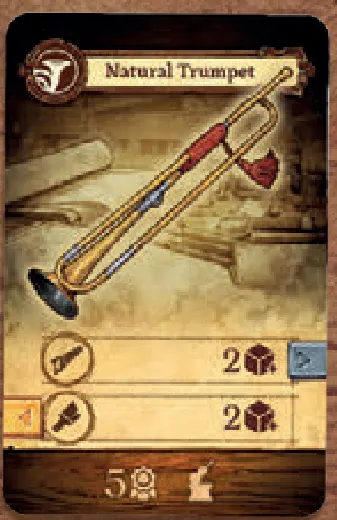
39 cards: two of each standard instrument, four Violins and one of each  rare
instrument. Each card shows its roughing cost, finishing cost and prestige; its Orchestra space is
listed below. Pictures are the instruments’ illustrations from the rulebook’s lore pages. Instruments and repairs need only match the patron’s family, not its era; performances must match era (FAQ). A bench discount applies only once per action, even when finishing two instruments; rewards from finishing the first can pay for the second (FAQ, FAQ). Any number of tokens can share a space, but only one instrument token holds its First Chair; other instrument tokens still count for goals and patron powers (FAQ, FAQ). Rare spaces accept instrument tokens only, and their chairs count for family goals and awards (FAQ, FAQ).
| Picture | Description |
|---|---|
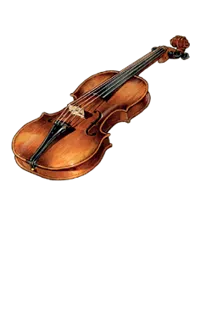 | Instrument: Violin; Family:  Strings; Cards: 4; Orchestra space: Either Violin space (Baroque/Classical or Classical/Romantic) |
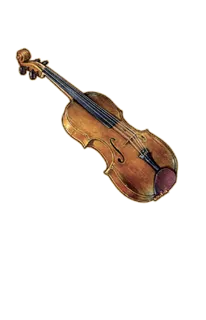 | Instrument: Viola; Family: Strings; Cards: 2; Orchestra space: Classical |
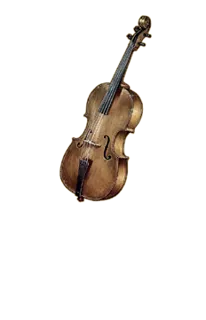 | Instrument: Cello; Family: Strings; Cards: 2; Orchestra space: Romantic |
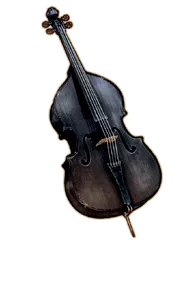 | Instrument: Double Bass; Family: Strings; Cards: 2; Orchestra space: Romantic |
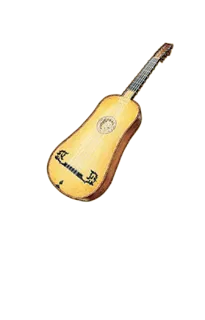 | Instrument: Baroque Guitar; Family: Strings; Cards: 2; Orchestra space: Baroque |
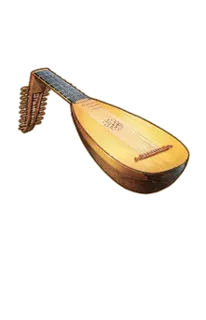 | Instrument: Lute; Family: Strings; Cards: 2; Orchestra space: Baroque |
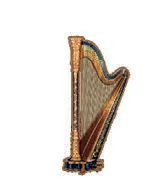 | Instrument: Harp; Family: Strings, rare; Cards: 1; Orchestra space: Rare Strings |
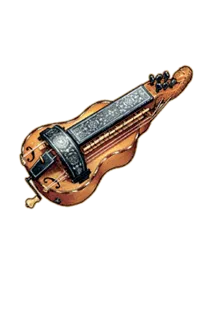 | Instrument: Hurdy Gurdy; Family: Strings, rare; Cards: 1; Orchestra space: Rare Strings |
| Instrument: Theorbo; Family: Strings, rare; Cards: 1; Orchestra space: Rare Strings |
 | Instrument: Transverse Flute; Family: Winds; Cards: 2; Orchestra space: Baroque |
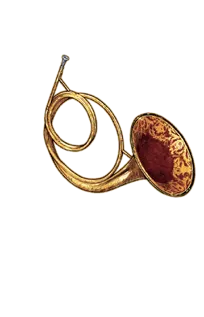 | Instrument: Natural Horn; Family: Winds; Cards: 2; Orchestra space: Baroque |
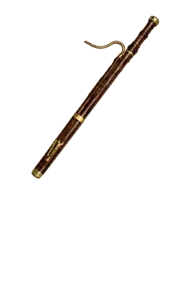 | Instrument: Bassoon; Family: Winds; Cards: 2; Orchestra space: Classical |
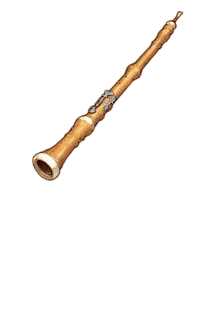 | Instrument: Oboe; Family: Winds; Cards: 2; Orchestra space: Classical |
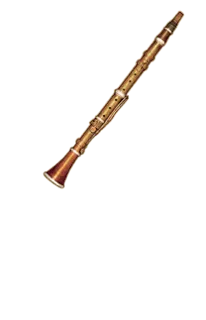 | Instrument: Clarinet; Family: Winds; Cards: 2; Orchestra space: Romantic |
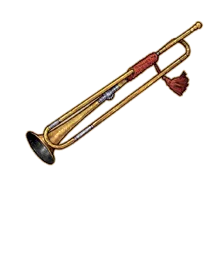 | Instrument: Natural Trumpet; Family: Winds; Cards: 2; Orchestra space: Romantic |
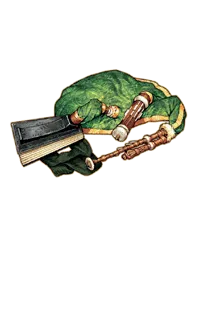 | Instrument: Musette de Cour; Family: Winds, rare; Cards: 1; Orchestra space: Rare Winds |
 | Instrument: Serpent; Family: Winds, rare; Cards: 1; Orchestra space: Rare Winds |
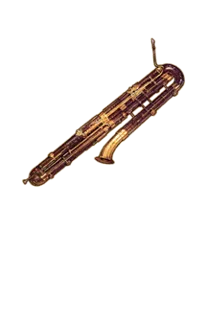 | Instrument: Contrabassoon; Family: Winds, rare; Cards: 1; Orchestra space: Rare Winds |
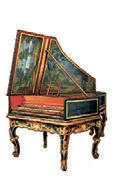 | Instrument: Harpsichord; Family:  Percussion & Keyboards; Cards: 2; Orchestra space: Baroque |
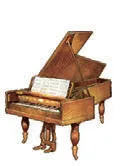 | Instrument: Fortepiano; Family: Percussion & Keyboards; Cards: 2; Orchestra space: Classical |
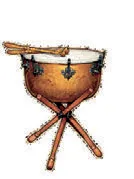 | Instrument: Timpani; Family: Percussion & Keyboards; Cards: 2; Orchestra space: Romantic |
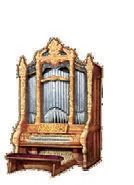 | Instrument: Pipe Organ; Family: Percussion & Keyboards, rare; Cards: 1; Orchestra space: Rare Percussion & Keyboards. Its rare First Chair bonus is the top instrument card, 1 inspiration and 1 money (FAQ). |
[Promo] The wild-era patron can count as a different era for each award and goal (FAQ). The Triangle is the promo Percussion & Keyboards instrument; it cannot satisfy a patron (FAQ). The rare ones are the seven instruments without a standard Orchestra space; the count (14 standard instruments × 2 + 4 Violins + 7 rare = 39) matches the box. A rare instrument’s First Chair stays with that first instrument and counts for its family, but rare spaces have no era (FAQ, FAQ). A second instrument may share a standard chair space for 2 money or 1 inspiration; it is not itself a First Chair. The rare Percussion & Keyboards chair gives the top instrument card, 1 inspiration and 1 money (FAQ, FAQ, FAQ). [Promo] adds four more rare instruments (Mandolin, Ocarina, Accordion, Triangle) — see KS Promo Pack.
Performance and repair cards
Searching a deck for a named type takes only the first card of that type, not an extra normal card; if none is in the deck, shuffle discards back in and continue searching (FAQ, FAQ). A Repair search takes the first card of the named family without seeing its cost first (FAQ).
| Picture | Description |
|---|---|
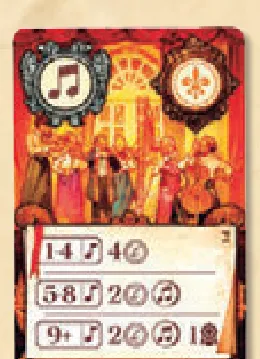 | Count: 24 performance cards; What it does: One era each (   ) and three result levels with their money and prestige. Medium and high place a performance token and can satisfy a patron of that era. The purple die may be rerolled by the Performance track (FAQ). Perform |
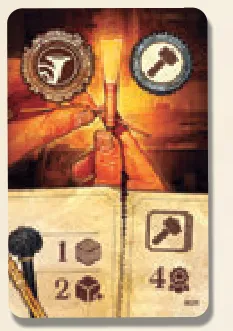 | Count: 24 repair cards; What it does: One instrument family each, a material cost and 2–4 prestige. Always place a repair token; can satisfy a patron asking for that family’s repair. Repair |
Personal goals
18 goal cards; each player keeps two, secretly. Each has three levels; at the end you score only the highest level you reached, rather than adding the values of all lower levels. Codes are printed on the cards. Rare First Chairs count for G16–G18. The same three instruments can satisfy G4 and G15 when they are from different families and each sits in a different era section (FAQ, FAQ).
| Picture | Description |
|---|---|
 | Goal: G1; Counts: Strings instruments finished |
 | Goal: G2; Counts: Winds instruments finished |
 | Goal: G3; Counts: Percussion & Keyboards instruments finished |
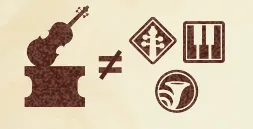 | Goal: G4; Counts: Instruments finished from different families; a trio across the three families can also meet G15 if each is in a different era (FAQ) |
 | Goal: G5; Counts: Performance tokens in the Romantic section |
 | Goal: G6; Counts: Performance tokens in the Classical section |
 | Goal: G7; Counts: Performance tokens in the Baroque section |
 | Goal: G8; Counts: Repair tokens in the Strings section |
 | Goal: G9; Counts: Repair tokens in the Winds section |
 | Goal: G10; Counts: Repair tokens in the Percussion & Keyboards section |
 | Goal: G11; Counts: Performer patrons completed |
 | Goal: G12; Counts: Composer patrons completed |
 | Goal: G13; Counts: Noble patrons completed |
 | Goal: G14; Counts: Patrons completed from different eras |
 | Goal: G15; Counts: Instrument tokens in different era sections; the same three instruments may also meet G4 if they cover different families (FAQ) |
 | Goal: G16; Counts: Strings First Chairs held (rare ones count; a rare instrument counts for its family) (FAQ) |
 | Goal: G17; Counts: Winds First Chairs held (rare ones count; a rare instrument counts for its family) (FAQ) |
 | Goal: G18; Counts: Percussion & Keyboards First Chairs held (rare ones count; a rare instrument counts for its family) (FAQ) |
Specialty worker cards
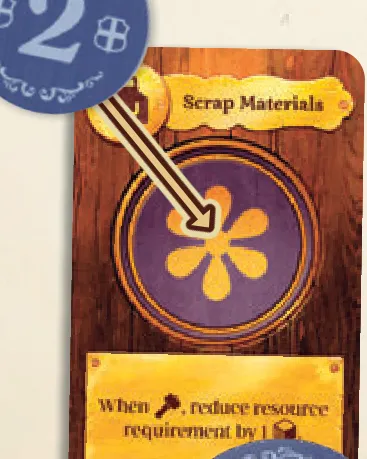
21 cards, seven per track (Reputation, Performance Skill, Craft Skill), each with a one-of-a-kind ability for the specialty chip assigned to it. With two or three players each deck holds players + 1 cards. A specialty card counts as unlocked for A5 as soon as taken (FAQ). A skill 4+ location bonus comes after the substituted action, and still applies to Clairvoyant or Forecaster; the Clairvoyant performance still rolls dice (FAQ, FAQ). Do not inspect the Specialty Worker deck before claiming a card (FAQ). The rulebooks print only a few of them; the abilities discussed by the developer on the BGG forum are:
| Picture | Description |
|---|---|
| Scrap Materials (shown above) | Ability: When this worker repairs, the repair costs 1 material less. |
| Clairvoyant | Ability: At Perform, instead of the normal action, draw the top 3 performance cards, complete one (rolling as usual) and discard the others. The location bonus still applies afterward (FAQ). |
| Forecaster | Ability: At the Guild, instead of the normal action, draw the top 3 instrument cards, keep one and discard the others. The location bonus still applies afterward (FAQ). |
| A roughing specialist | Ability: After roughing, may also finish an instrument — pay its full finishing cost, with no finishing-bench bonuses or discounts (FAQ; ruling). |
The other cards’ abilities are printed on the cards. Whatever the ability, a specialty chip used at a location with skill 4+ still earns the location’s bonus, even when taking the $2 alternative (FAQ).
Market cards
16 cards, one per round: each sets the buy and sell price of animal (1–3), wood (2–4) and metal (4–6). M1 (average prices) is always round 1. A $10 search gets only the card of the named type; when searching Repairs, take the first card of the chosen family without seeing its cost (FAQ, FAQ, FAQ). Inspiration reduces the price of one cube per token; 3 wood at $3 each with 2 inspiration costs $7. The $15 Reputation training is a separate purchase, on top of other spending (FAQ, FAQ). Market
Solo cards
| Picture | Description |
|---|---|
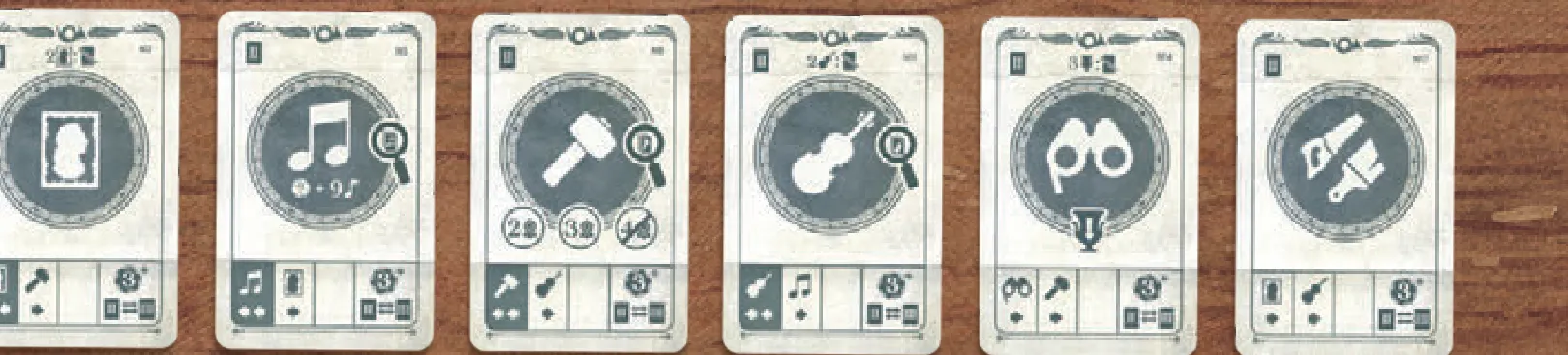 | Count: 18 AI action cards; What it does: Six actions — Salon, Guild, Perform, Repair, Balcony, Workbench — at levels 1, 2 and 3; they send AI workers and upgrade with skilled workers. A tie goes to the AI; it ignores repairs above its level, counts all other tokens when choosing the fewest-token space, and any worker on Workbench can trigger an upgrade. It uses substitutes if its repair/performance tokens run out (FAQ, FAQ, FAQ, FAQ, FAQ, FAQ). Solo |
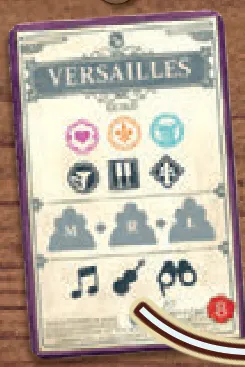 | Count: 8 solo guild cards; What it does: The AI’s personality: starting priority, era and family preferences, award order and first-player number. The AI’s starting instrument is assigned to its matching patron immediately (FAQ). Do not look through the royal-patron or specialty decks before claiming a card (FAQ). Solo |
Tiles
Public awards
15 tiles; 4 are used with four players, 3 otherwise. Each has three levels (amount needed and prestige printed on the tile). Awards are checked independently, so one set of completed patrons can qualify for several different tiles (FAQ). A Reputation-track award offer is optional; if you decline, you get no substitute reward; each level you take needs an unused award marker and an award/level you qualify for (FAQ, FAQ). Rules
| Picture | Description |
|---|---|
 | Award: A1; Counts: Romantic patrons completed |
 | Award: A2; Counts: Baroque patrons completed |
 | Award: A3; Counts: Classical patrons completed |
 | Award: A4; Counts: Patrons completed of different types |
 | Award: A5; Counts: Specialty worker cards unlocked; a card counts as soon as you take it (FAQ) |
 | Award: A6; Counts: Repair tokens in the Orchestra |
 | Award: A7; Counts: Repair tokens in different family sections |
 | Award: A8; Counts: Performance tokens in the Orchestra |
 | Award: A9; Counts: Performance tokens in different era sections; rare spaces have no era and do not count (FAQ) |
 | Award: A10; Counts: Rare instruments finished |
 | Award: A11; Counts: Instruments finished |
 | Award: A12; Counts: First Chairs in different family sections (rare ones count for their family) (FAQ) |
 | Award: A13; Counts: Instrument tokens in the Romantic section; rare instruments have no era (FAQ) |
 | Award: A14; Counts: Instrument tokens in the Classical section; rare instruments have no era (FAQ) |
 | Award: A15; Counts: Instrument tokens in the Baroque section; rare instruments have no era (FAQ) |
Luthier family tiles
8 tiles. The setup side shows the family’s turn-order number (lowest goes first), its starting resources and a one-time starting ability; then the tile is turned to its portrait. Each player is dealt two and keeps one.
| Picture | Description |
|---|---|
| Broadwood | Number: 1; Starting resources and ability: 1 animal, 1 wood, 1 metal, 5 money and a Performance Skill step; the bonus of your starting patron’s space is doubled. It is first player when chosen (FAQ). |
| Amati | Number: —; Starting resources and ability: 20 money and a Reputation step; you may visit the Market before the game without moving your cart, so your normal round-1 Market visit remains available (FAQ). |
| Érard | Number: —; Starting resources and ability: 1 animal, 1 wood, 1 metal, 2 inspiration; take worker #2 at once. Turn order goes from lowest to highest family number (FAQ). |
| Walter | Number: 4; Starting resources and ability: 1 animal, 2 wood, 2 money, 1 apprentice; draw 3 patrons and you may place one on your workbench; the others go to the top or bottom of the deck. |
| Guarneri | Number: —; Starting resources and ability: Complete a repair at the start and pay its cost as normal. It may claim a First Chair and satisfy a patron (FAQ, FAQ). |
| Steinweg | Number: —; Starting resources and ability: Perform at skill 5: roll both white dice and may spend inspiration, but do not advance the Performance track because this is not a Perform action. The performance may claim a First Chair and satisfy a patron if it reaches the middle result (FAQ, FAQ). |
| Stradivari | Number: —; Starting resources and ability: See the tile. |
| Guadagnini | Number: 8; Starting resources and ability: 1 animal, 1 metal, 3 money, 1 apprentice; put your starting instrument straight onto the finishing bench. |
Broadwood, Amati, Érard and Guadagnini are as set up in The Rehearsal; Walter is the rulebook’s example tile; Guarneri, Steinweg and the turn-order extremes are from the developer’s forum rulings. Turn order runs from the lowest family number to the highest; Broadwood is first and Guadagnini last when selected (FAQ). A dash means the number isn’t given in the rulebooks.
Tokens & pieces
To be added.
Icons
| Icon | Meaning |
|---|---|
| Strings |
 | Balcony |
| Winds |
 | Market |
| Percussion & Keyboards |
 | Performance Skill |
 | Instrument card |
 | Craft Skill |
| Rare instrument |
 | Finishing bench |
| Crafted instrument (token) |
 | Roughing bench |
| Public award |
 | First Chair |
| Apprentice |
 | Start of round |
 | Reputation |
 | End of game |
| Baroque |
| Inspiration |
| Romantic |
| Money |
| Classical |
 | Prestige |
 | Patron |
 | Any material |
| Composer patron |
| Animal |
| Performer patron |
| Wood |
| Noble patron |
| Metal |
| Royal patron |
| Worker chip |
 | Repair |
 | Performance |
| Repair token |
| Performance token |
 | Completed patron |
 | Patron gift |
 | Personal goal |
 | Skill 4 or more (also 3+, 5+, 6+) |