Space Agencies Expansion
SETI: Space Agencies — 11 asymmetric organizations, quick start cards, a four-round game, signal tokens, 42 new cards, three new alien species and solo changes.
Short tag: [Agencies]
What it adds
| Component | What it is for |
|---|---|
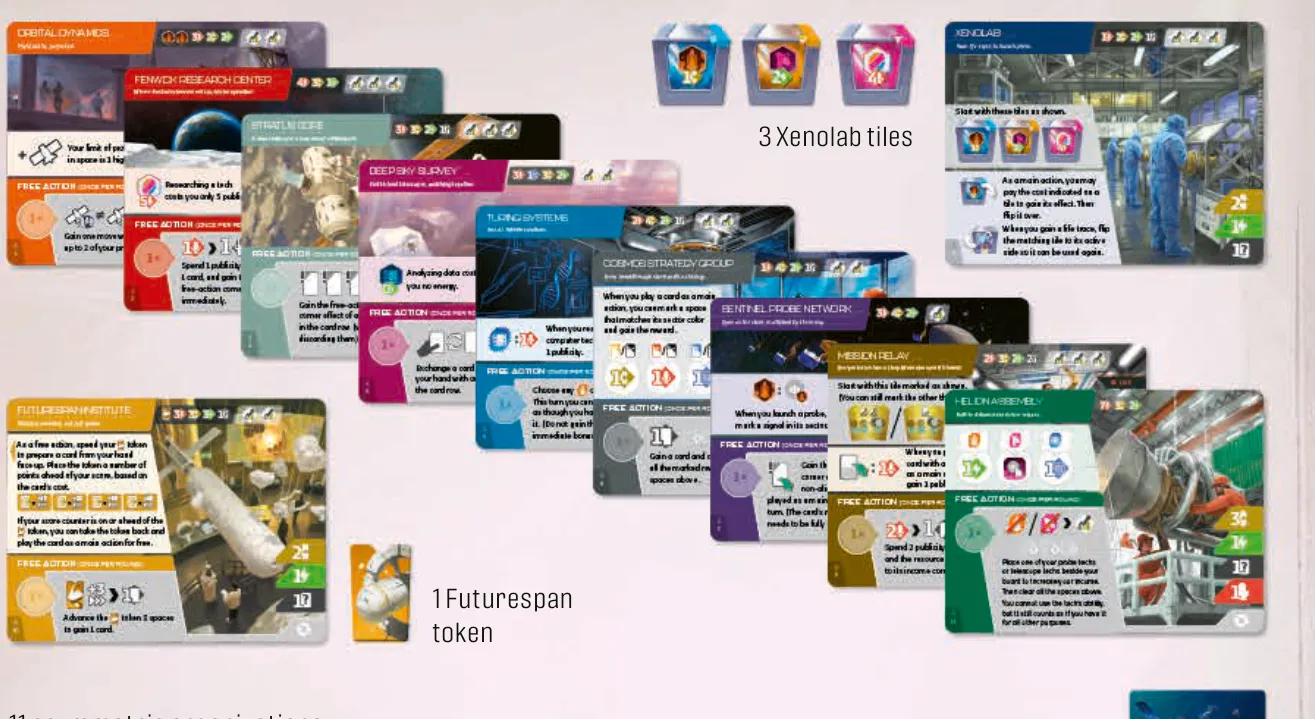 | 11 organizations (with 3 Xenolab tiles and the Futurespan token) — your asymmetric agency. |
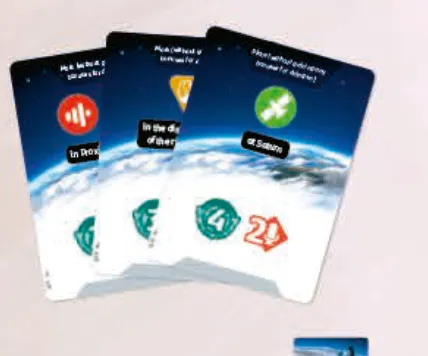 | 21 quick start cards — a ready-made opening. |
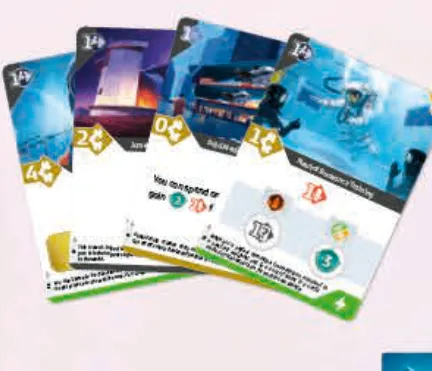 | 42 cards for the main deck, marked with the expansion icon. |
 | 10 signal tokens (unlimited) — extra card-row signals during scans. |
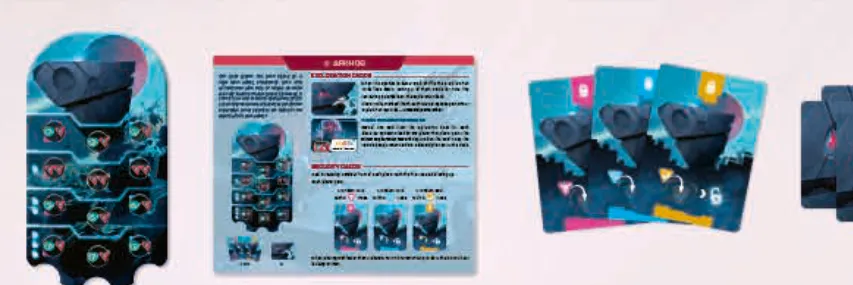 | Arkhos: board, rule sheet, 9 exploration cards, 12 security cards. |
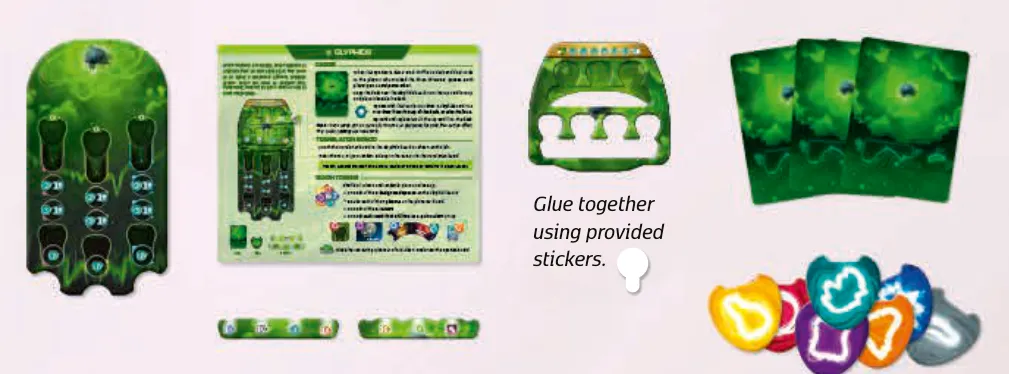 | Glyphids: board, rule sheet, translation board, 2 strip tiles, 10 cards, 35 glyph tokens. |
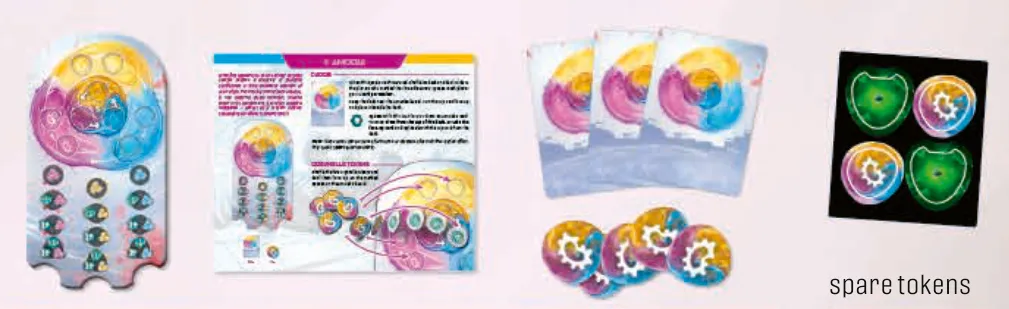 | Amoeba: board, rule sheet, 10 cards, 5 organelle tokens. |
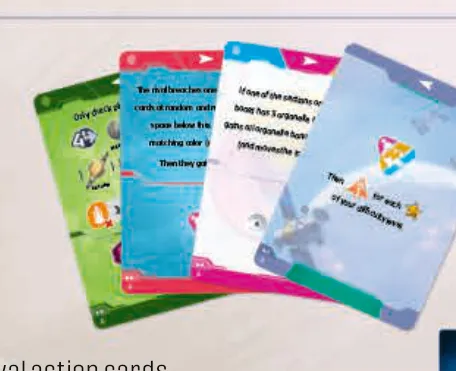 | 4 rival action cards — a starting card and one per new species. |
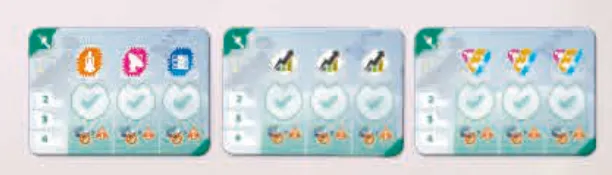 | 3 long-term objective tiles for solo. |
Using this expansion
Three parts join the base game whether or not you use organizations:
- More cards — shuffle the 42 new cards into the main deck.
- Alien species — mix the 3 new species with the 5 originals; 2 are drawn as usual.
- Signal tokens — keep them in reach for the new effects that give them.
Signal tokens
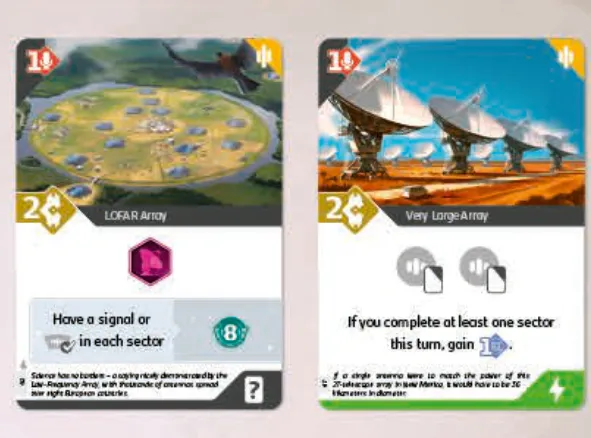
Some cards, species and organizations give a signal token. During a  scan
action, discard tokens: for each, discard one more card from the card row and mark a signal in a
matching sector. The row is only refilled after the whole scan, so at most two tokens per scan.
Effects that mark signals without being a scan can’t use them.
Playing with organizations
Each player runs an organization with its own powers, starting setup and income. Because they do more than the base agencies, the game lasts 4 rounds: rounds 2, 3, 4 and 5.
Setup changes
- Prepare end-of-round stacks for rounds 2, 3 and 4 only.
- Choose the starting player and set starting scores by turn order as usual.
- Everyone’s publicity starts at 0; starting income cards stay in the box.
- Deal each player 2 organizations, 3 quick start cards and 4 main-deck cards. Keep 1 organization, 2 quick start cards and all 4 cards.
- Everyone resolves both quick start cards and their organization’s starting resources and effects; income increases come last, choosing from your cards (resolve several one by one — a random card from the first may be tucked by the next).
- No income at setup: you take income at the start of rounds 3, 4 and 5.
First game: organizations 1–4 (bottom-left number) are the simplest — give each player one of them, 2 quick start cards (not 3) and 4 main-deck cards.
Quick start cards
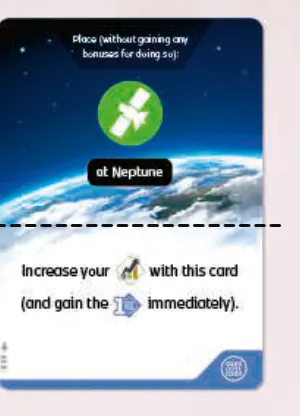
The top half tells you to place an orbiter, trace or signals — mark them but gain nothing for them. The bottom half gives starting resources, points or effects. Afterwards return the cards to the box, unless one was tucked for income.
Organization cards
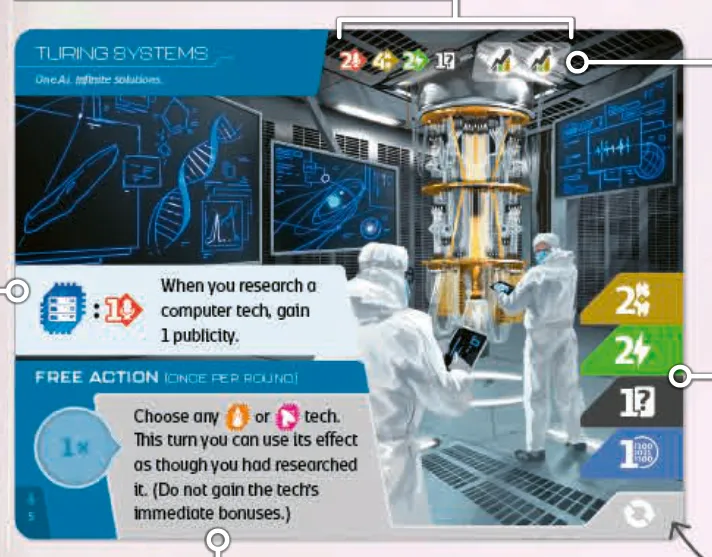
- Starting resources and effects — taken at setup.
- Passive power — always on.
- Once per round ability — a free action; mark its space when used. Your income step reminds you to clear it.
- Income increases — tuck cards at setup and gain their resource at once.
- Income — what you collect at the start of rounds 3, 4 and 5.
The 11 organizations
The card text governs; these are the points the publisher’s FAQ clarifies.
| Organization | FAQ clarification |
|---|---|
| #1 Orbital Dynamics | Its once-per-round ability moves two probes; if one starts on asteroids, add the extra move it needs. |
| #2 Fenwick Research Center | Techs cost 5 publicity — always, never 6. Its ability gains a card from the row or a revealed random card. |
| #3 Stratus Core | Its ability does not discard the card-row cards it uses. |
| #4 Deep Sky Survey | Analyze data costs no energy, always. It can swap an alien card with a card-row card. |
| #5 Turing Systems | Borrow a tech’s ability for one turn — not “researching” (no triggers). A probe launched past the limit stays. |
| #6 Cosmos Strategy Group | Mark a space for each card played whose sector colour matches (black = any); this does not count as a mission. Its ability takes a card and clears the spaces. FAQ |
| #7 Sentinel Probe Network | Once a round, a card played as main action also gives its free-action corner, after the effect; not for alien cards. |
| #8 Mission Relay | Starts with one gold tile marked on its lowest value, on top of the usual 3. Its ability gains a card. |
| #9 Xenolab | Three tiles with a discounted main action; a used tile flips and comes back when you gain the trace on its back (you keep the trace). |
| #10 Futurespan Institute | Prepare a card face up and put the token as many points ahead as its cost; on reaching it, play the card free as a main action. One card at a time; not Centaurian cards. FAQ |
| #11 Helion Assembly | Mark a space when you research a matching tech; this does not count as a mission. Its ability switches off a probe or telescope tech for an income increase and clears the spaces. FAQ |
Adjustments for 1–2 players
Optional, and usable even without organizations: before choosing, reveal 4 quick start cards and mark everything in their top halves with neutral pieces; ignore their bottom halves. In a completed sector neutral markers count as another player’s — with at most 2 they can never win, but a neutral second place leaves one neutral marker behind.
Solo with organizations
Set up as a 2-player game (neutral quick start cards allowed) and prepare solo as usual. The rival gets no organization or quick start cards; instead:
- shuffle the new starting action card into its deck;
- its publicity starts at 4;
- objectives (not at 1 star): remove all level I objectives, stack II and III by difficulty and reveal 3 (level II); shuffle the 3 long-term objectives and reveal 2.
You choose your organization and quick start cards after seeing all that.
Long-term objectives
- No replacement — a completed long-term objective is removed from the game, so it can’t be spent at the end of a round.
- Penalty — at the end of rounds 2, 3 and 4 the rival advances 1 progress for every uncompleted task still showing. They are not scored at the end.
- One trigger still marks only one task.
If the rival must gain an advanced action card and none are left, it gains 8 points instead.
New alien species
The three rule sheets come with the expansion; the summaries below follow the publisher’s how-to-play videos for Arkhos, Glyphids and Amoeba.
Arkhos
An ancient alien construct with 4 security levels. On discovery, shuffle the 9 exploration cards, set 4 aside and use the other 5 as the exploration deck (reshuffle all 9 and deal 5 when it runs out). Reveal one card per discovery marker; its owner gains that card’s minor reward. Everyone gets 3 face-up security cards — one each with a purple, a blue and a yellow trace. At first only the top 3 spaces (level 0) can be marked; marking an Arkhos overflow space lets you breach the security card of that colour into your hand, opening the next level (1, 2, then all). Breached cards are normal cards: discard for a minor exploration reward or play for 2 credits for a major one — you keep your access.
Glyphids
A message in an alien language. On discovery, attach the translation board with its 2 strips (random sides) and lay glyph tokens face up on the board’s 6 spaces, beside each of the 7 planets, on each of the 8 sectors and on each tech stack that still has its 2-point tile. Take a token by orbiting or landing at its planet or moon, winning its sector, researching its tech or marking its space (only the top 3 board spaces refill). As a free action place a token in the translation board — bottom row first — for its reward; once a glyph type is placed it is deciphered and no more of that type go in. Glyphid card icons pay out only for deciphered glyphs. Unplaced tokens score at the end in sets of different types: 1, 3, 5 points … up to 20 for all seven.
Amoeba
A living single-celled organism. On discovery, deal the 5 organelle tokens onto the marked spaces. Marking a space gives its reward plus every organelle bonus in that colour section; a card’s single organelle icon gives one organelle of your choice. Every organelle you collect from then moves one space — outer ones clockwise, the inner one counter-clockwise, skipping occupied spaces — so the species keeps mutating away from the colour players focus on.
Scoring changes
Nothing new in final scoring beyond the cards: Glyphid sets score at the end; Amoeba and Glyphid end- of-game cards count overflow spaces and glyph sets as their text says.
Space Agencies promo card
A pre-order promo for this expansion is described on Other Promo Cards.