Cards & Components
Brick & Mortar cards, market, tokens and icons.
Art: Octoraffe Games, published rulebook and publisher product photo.
Boards
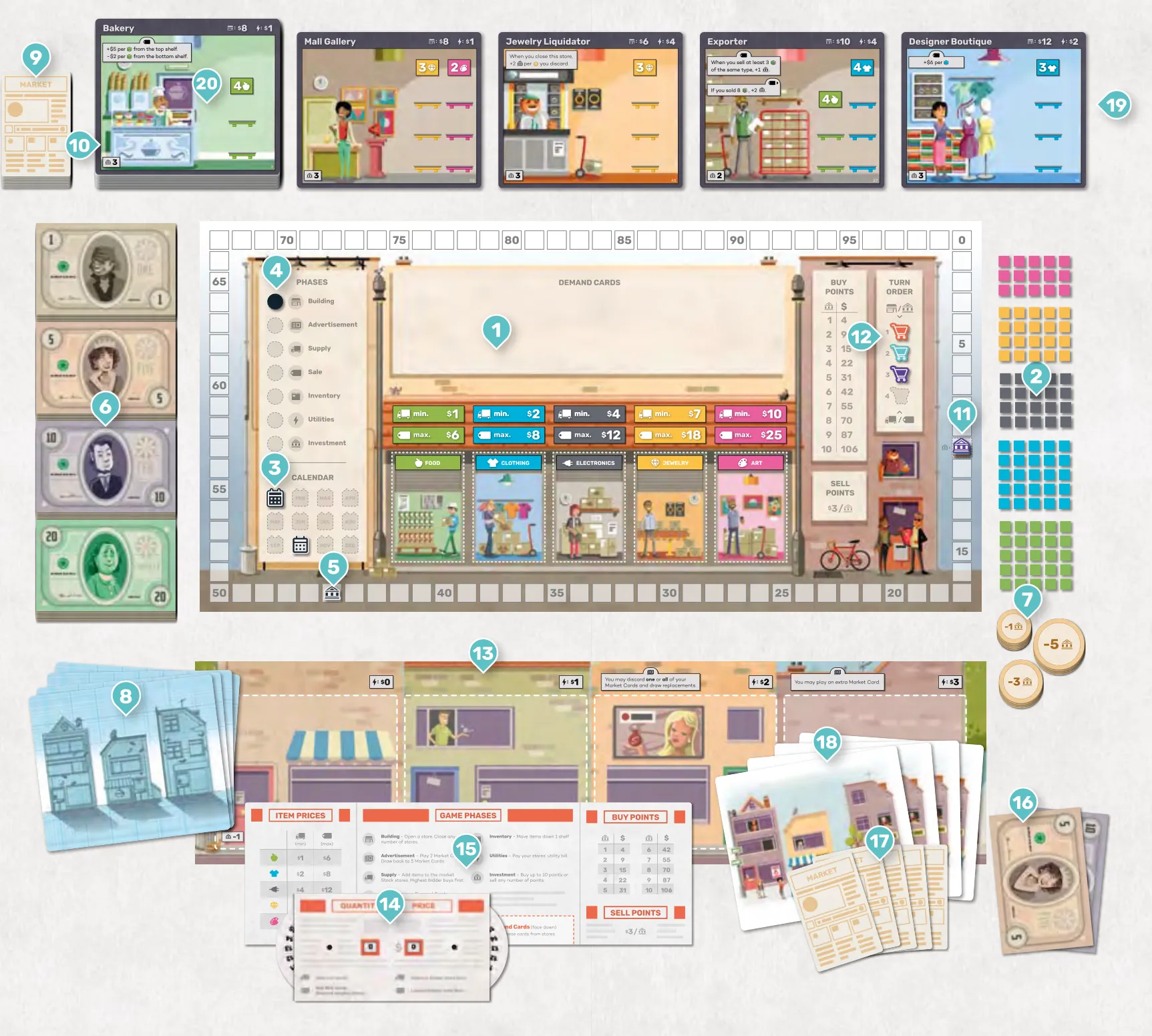
The central market shows prices, calendar, phase order, points and turn order. Your building holds Stores and charges extra utilities in later slots. Use the numbered Setup checklist and Store layout.
Cards
How to read a Store
Purchase cost and utilities appear in the upper-right corner. Capacity signs identify item type and maximum stock across its shelves; the lower-left building symbol is final points. Phase icons and arrows identify exactly when its modifier applies. See Store layout and timing.
| Store | Effect and timing |
|---|---|
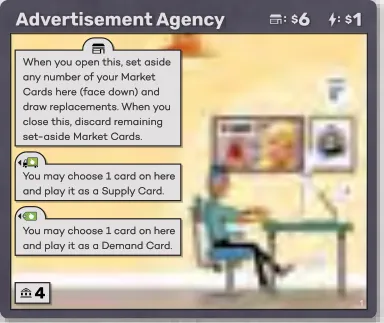 | Advertisement Agency. When opened, set aside Market Cards for its later supply/demand additions. Choose after seeing the collective supply or demand, at the printed timing. Store rules. |
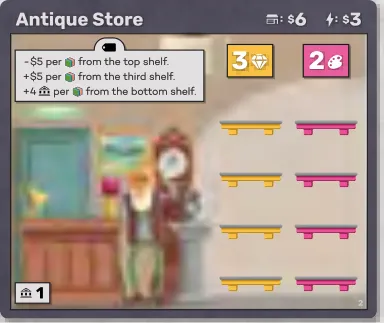 | Antique Store. Shelf position changes art revenue: top-shelf sales lose $5 per crate, third-shelf sales gain $5, and bottom-shelf sales gain 2 points per crate as well as money. Store rules. |
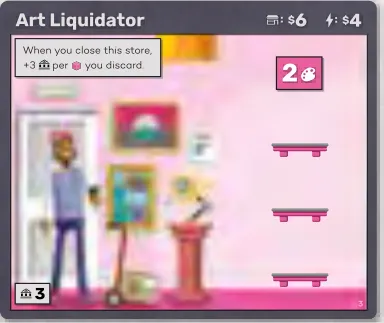 | Art Liquidator. Closing this Store awards its printed points per discarded art crate. Expiration and surplus do not trigger this reward. Store rules. |
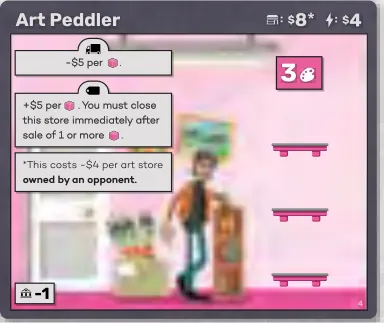 | Art Peddler. Discounts art stocking and increases art sale revenue. Close after actually selling at least one art crate; an all-surplus commitment does not close it. Apply its opponent-Store purchase discount after the auction. Store rules. |
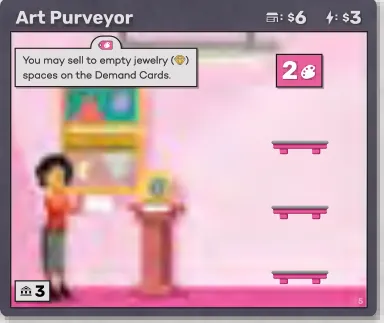 | Art Purveyor. May deliver art to empty jewelry boxes as well as art boxes on shared Demand Cards. Include those legal spaces when choosing quantity. Store rules. |
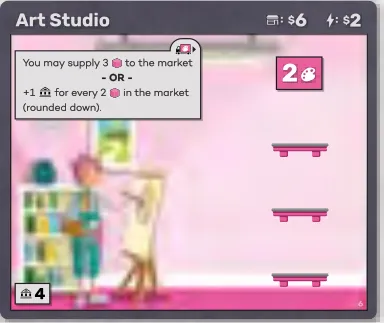 | Art Studio. After art stocking, either add 3 art from general supply to the market or gain 1 point per 2 art already there, rounded down. Added art pays no cash. Store rules. |
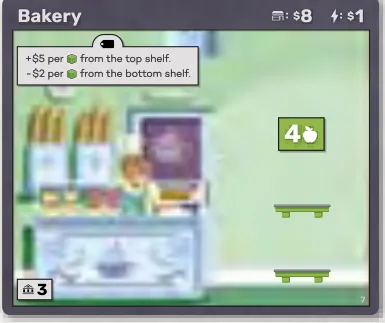 | Bakery. Food sold from its top shelf earns +$5 per crate; food from the bottom shelf earns $2 less, with a $0 floor. Store rules. |
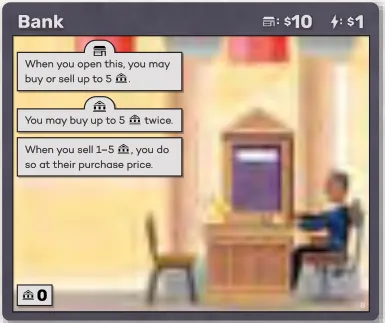 | Bank. Allows point buying or selling when opened, and two purchases of at most 5 points during Investment. The combined Investment cap remains 10. Store rules. |
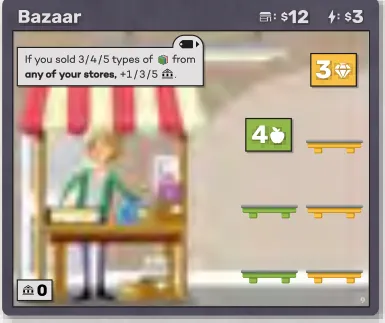 | Bazaar. After Sale, gain 1/3/5 points if you sold 3/4/5 item types across your entire building, including other Stores. Store rules. |
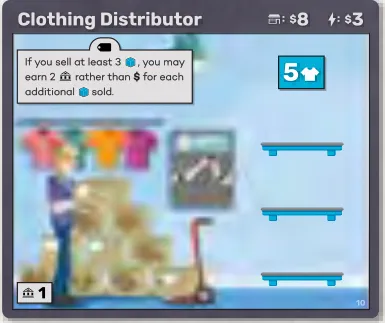 | Clothing Distributor. After the first 3 clothing sales, additional clothing can earn its printed points instead of money. Choose how many qualifying crates to score this way. Store rules. |
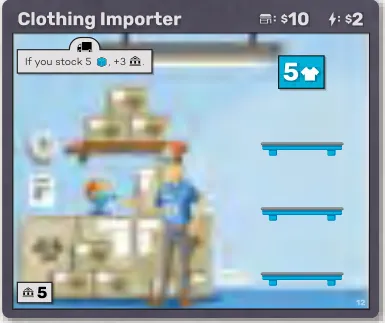 | Clothing Importer. Stocking all 5 clothing in one Supply Phase gains 3 points; it is not enough to accumulate five over several months. Store rules. |
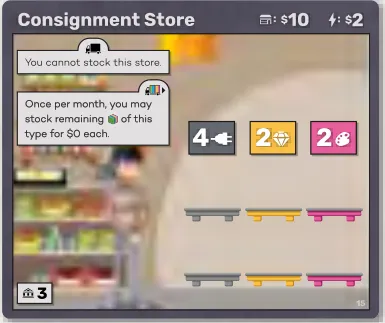 | Consignment Store. Cannot stock through ordinary buying. Once per month, immediately after one relevant type is stocked, may take leftover crates of that type for free. Store rules. |
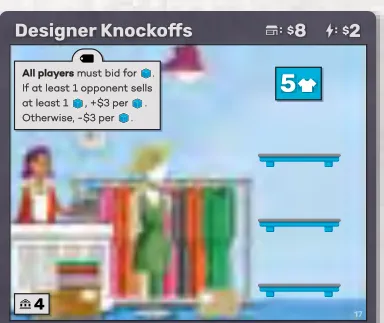 | Designer Knockoffs. Clothing sale revenue depends on whether an opponent sells clothing that phase, including an opponent scheduled later. Bidding can be needed even with sufficient demand. Store rules. |
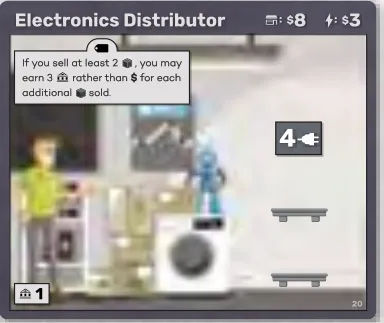 | Electronics Distributor. After the first 2 electronics sales, additional electronics can earn 3 points each instead of money. Store rules. |
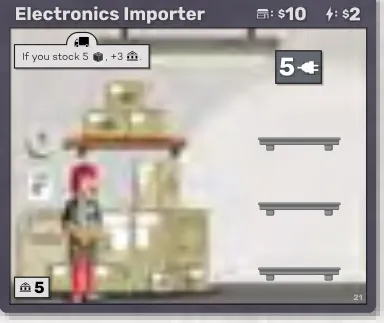 | Electronics Importer. Stock all 5 electronics during one Supply Phase to gain the printed 3 points. Store rules. |
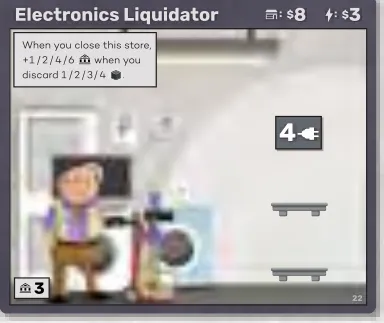 | Electronics Liquidator. When closed, its printed reward scales with the number of electronics discarded. Expiration and surplus do not qualify. Store rules. |
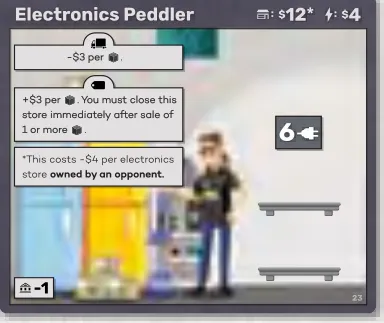 | Electronics Peddler. Discounts electronics stocking and increases their sale revenue; closes after an actual sale. Its buying discount is applied after the auction price is established. Store rules. |
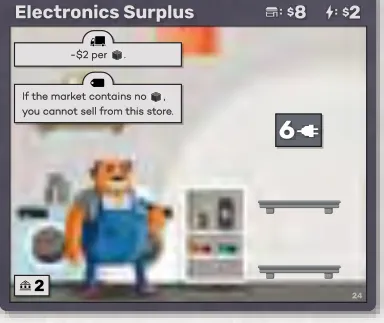 | Electronics Surplus. Electronics stocking costs $2 less per crate. If the market is empty of electronics, this Store cannot sell, although your other electronics Stores still may. Store rules. |
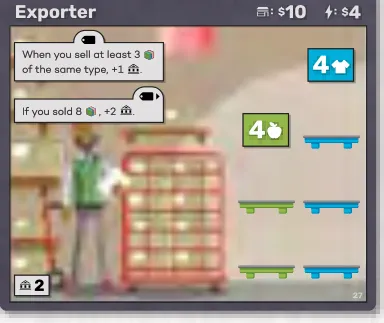 | Exporter. Rewards qualifying batches sold from this Store. Score its sale bonuses when the relevant crates sell, updating turn order immediately. Store rules. |
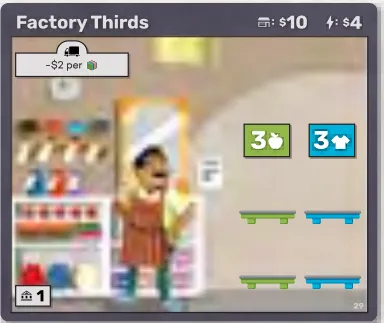 | Factory Thirds. Stocks clothing and electronics at a $2-per-crate discount, never below $0. Store rules. |
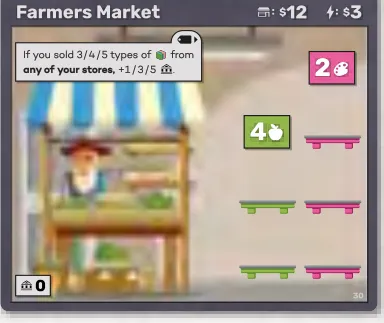 | Farmers Market. After Sale, gain 1/3/5 points for selling 3/4/5 types across any of your Stores. Store rules. |
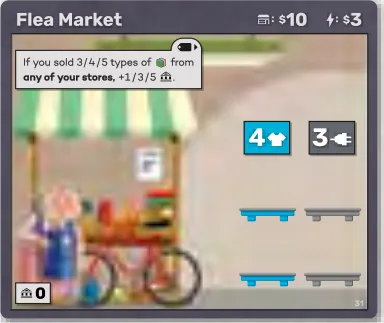 | Flea Market. After Sale, gain 1/3/5 points for selling 3/4/5 types across any of your Stores. Store rules. |
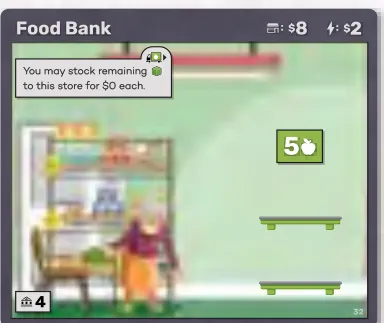 | Food Bank. May take leftover food for free after food stocking, up to capacity. Ordinary paid food buying is also allowed; taking all leftovers is optional. Store rules. |
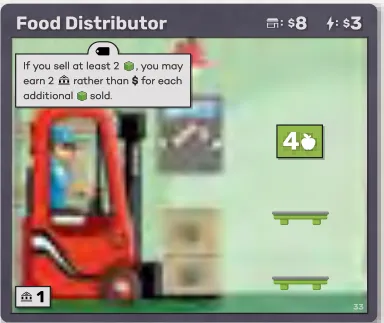 | Food Distributor. After the first 2 food sales, additional food can earn 2 points each instead of money. Store rules. |
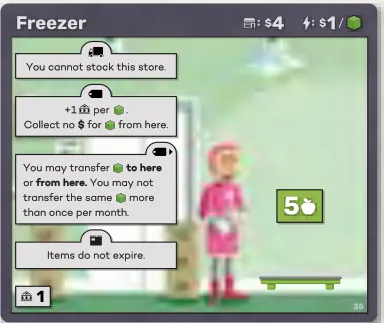 | Freezer. Cannot stock directly. Transfer food from other Stores at its printed timing. Sold food earns points instead of money, still consumes demand, and stored food does not expire. Store rules. |
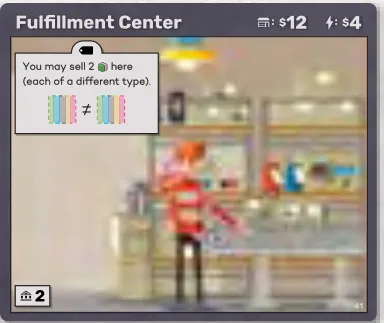 | Fulfillment Center Hybrid. Private demand for 2 crates, each of a different type. Card 41 is used for the star first-game hand. It holds no stock between phases. Store rules. |
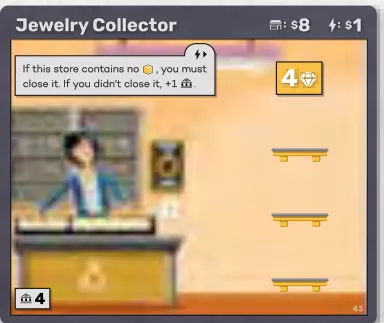 | Jewelry Collector. Check its jewelry after Utilities: if empty it must close; otherwise gain its printed point reward. Utilities still have to be paid. Store rules. |
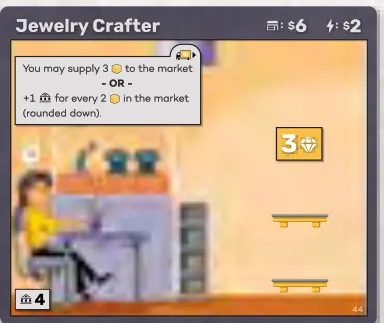 | Jewelry Crafter. After jewelry stocking, either add 3 jewelry from general supply to the market or score 1 point per 2 jewelry already there, rounded down. Store rules. |
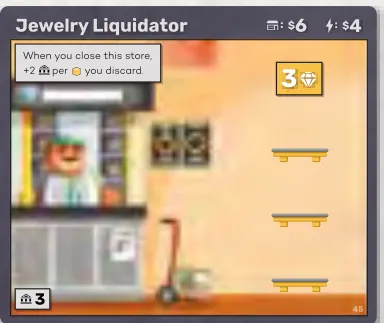 | Jewelry Liquidator. When closed, awards the printed points for jewelry discarded from it. Other kinds of discard do not trigger its closing reward. Store rules. |
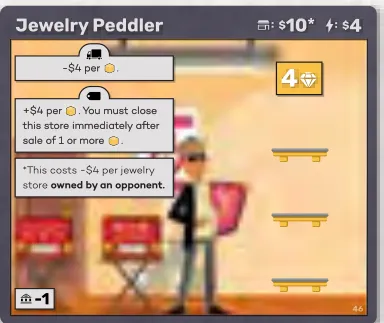 | Jewelry Peddler. Jewelry stocks at a discount and sells at a bonus. Close after an actual sale, not after an all-surplus commitment. Apply the purchase discount after bidding. Store rules. |
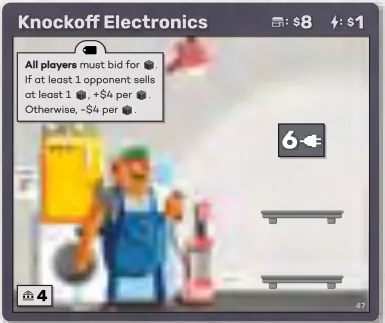 | Knockoff Electronics. Electronics sale revenue depends on whether any opponent sells electronics, including a later seller. Its special condition can require a quantity bid even when demand is sufficient. Store rules. |
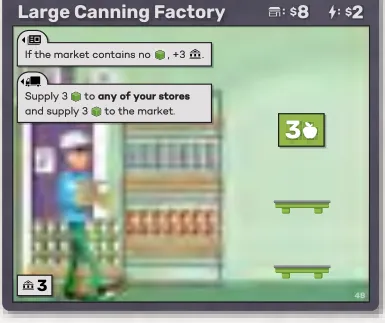 | Large Canning Factory. Before food stocking, gains points if no food remains in the market, then supplies food from the general supply to your Stores and to the market as printed. Store rules. |
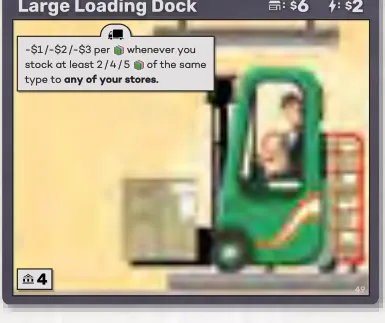 | Large Loading Dock. Gives a building-wide stocking discount based on the number of crates of one type bought. It stacks with local discounts; stop at $0. Store rules. |
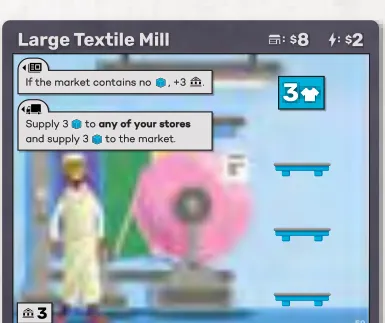 | Large Textile Mill. Before clothing stocking, gains points if no clothing remains, then supplies clothing from general supply to your Stores and the market as printed. Store rules. |
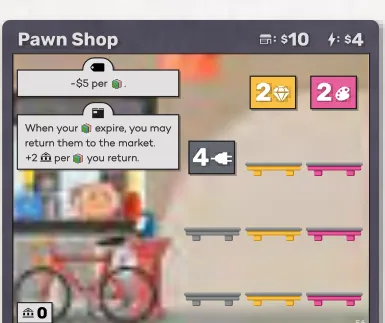 | Pawn Shop. Its sales have a penalty, with a $0 floor. When its stock expires, it can return those crates to the market for points; you cannot choose to expire them early. Store rules. |
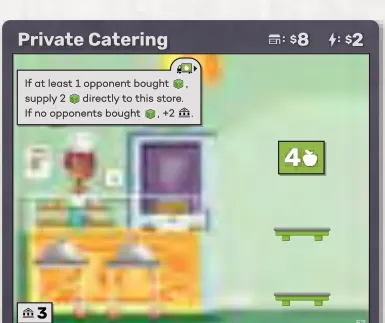 | Private Catering. After food stocking, supplies up to 2 food to itself if an opponent bought food; otherwise earns its printed points. Free food comes from general supply. Store rules. |
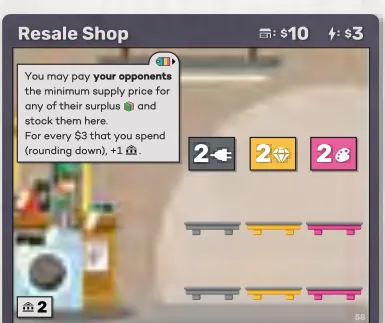 | Resale Shop. May buy opponents’ surplus at the type’s normal minimum price, paying those opponents. It must be able to afford that purchase and have capacity. Store rules. |
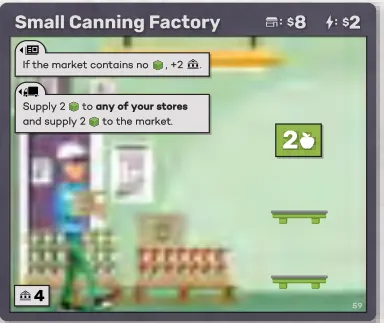 | Small Canning Factory. Before food stocking, gains points if no food remains, then supplies food from general supply to your Stores and the market as printed. Store rules. |
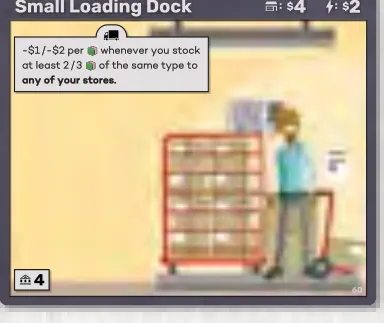 | Small Loading Dock. Gives a building-wide discount when stocking enough crates of one type. Stack with local Store discounts but never pay less than $0. Store rules. |
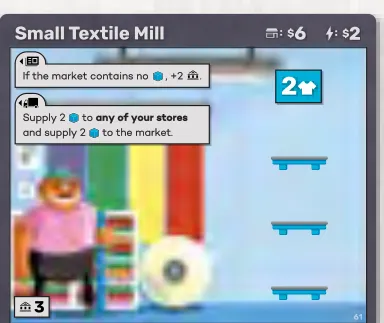 | Small Textile Mill. Before clothing stocking, gains points if no clothing remains, then supplies clothing from general supply to your Stores and the market as printed. Store rules. |
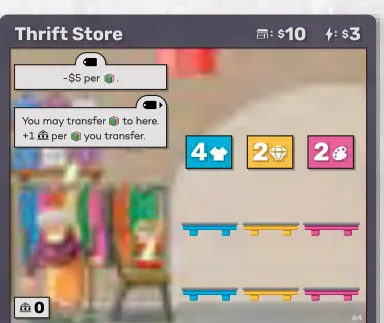 | Thrift Store. Discounted sales and a transfer reward. Goods transferred after Sale immediately age during Inventory, so moving them does not skip aging. Store rules. |
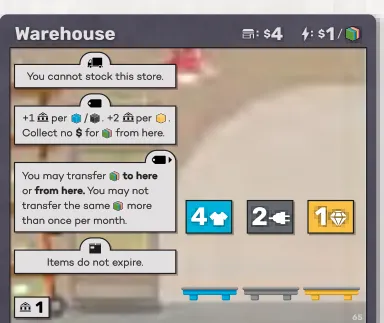 | Warehouse. Cannot stock directly. Transfer the printed item types from other Stores at its timing; it scores sales in points instead of money, still uses demand, and its stored crates do not expire. Store rules. |
Other Store faces
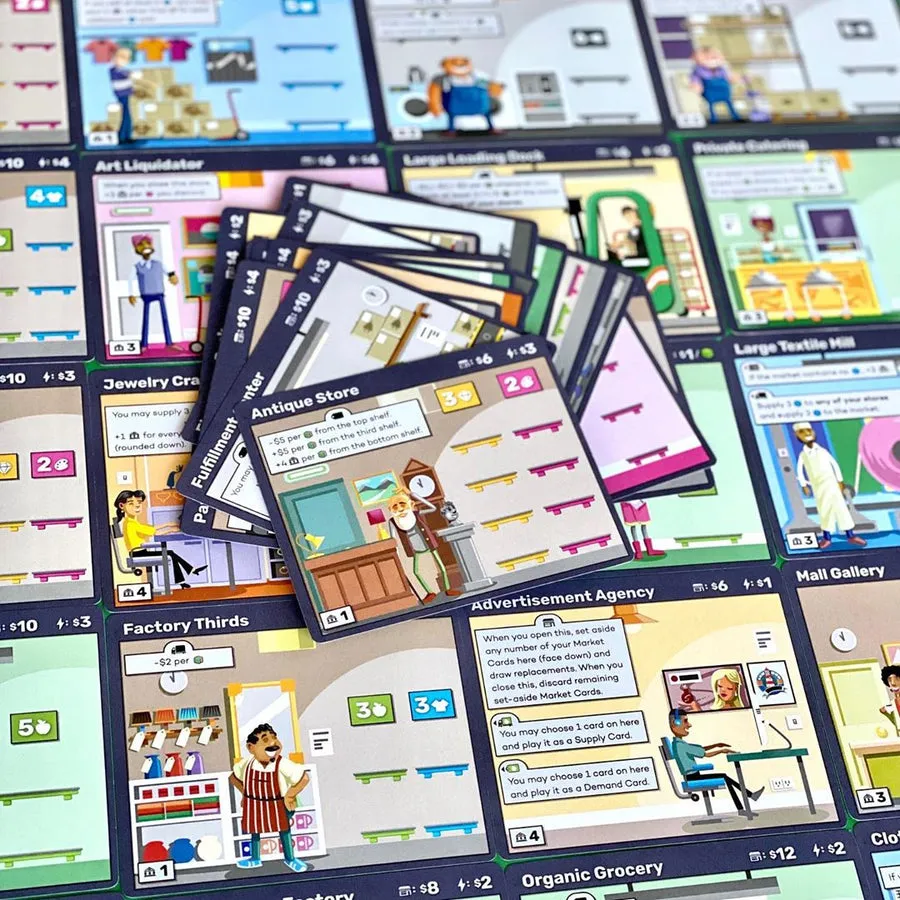
The publisher photo gives an overview of more Store art, but does not show each face clearly enough to identify or read it. Individual faces: To be added.
Starting Stores
Six base Starting Stores are separate from the 65 regular Stores. Choose one free in January and fill it to capacity. First-game hands identify Mio’s Corner Store, Kimberly’s Market, Herron’s Market and Newt’s Clothing; Andrew’s Deli and Kristen’s Fashions complete the base set. First game.
Pictures: To be added.
Market Cards
84 Market Cards can be played face up for supply or face down for demand. Each printed crate is one item or demand box. Advertisement and market rules.
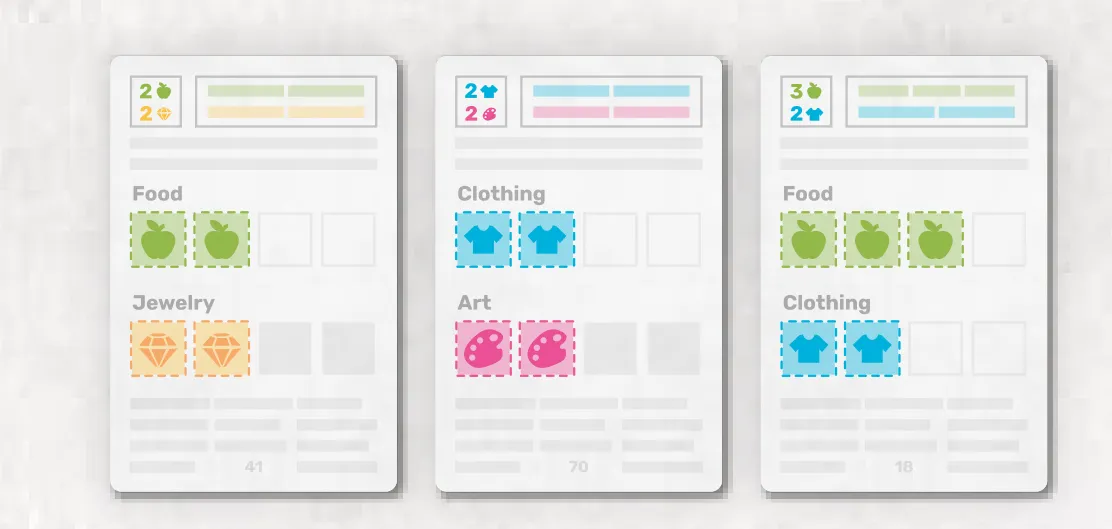
The publisher rulebook shows three Demand Card examples; it does not show the full set of 84 Market Cards. Individual faces: To be added.
Tiles
This game uses cards and marker tokens rather than a separate tile system. [Stores] The Promo Starting Stores are cards.
Tokens & pieces
| Piece | Use |
|---|---|
 | Debt: each debt point provides $2 and subtracts 1 final point. Tokens have denominations 1, 3 and 5. Debt. |
| Food, clothing, electronics, jewelry and art crates | Stock and sell through the market. The box supplies 25/25/20/20/15 cubes, respectively; use an extra-resource token for 5 crates when needed. Crates are unlimited. Supply. |
| Money | $1/$5/$10/$20 notes; kept private behind your screen or face down. Utilities and Investment. |
| Bidding dials | Right dial is price; left dial is quantity for Sale only. Bidding. |
| Point and turn markers | Relative score changes turn order when somebody passes another player. Turn order. |
| Phase, month and ending markers | Track the seven phases and final-month triggers. Scoring. |
Icons
| Icon | Meaning |
|---|---|
 | Food; stock and sell first. |
 | Clothing; second item type. |
 | Electronics; third item type. |
 | Jewelry; fourth item type. |
 | Art; last item type. |
Timing symbols refer to phases. An arrow before or after a phase restricts the effect to that moment; colored icons restrict it to a particular item’s part of the phase. Timing reference.