Teach the Game
Run a shipping company, build shared sea routes and take control of the four cargo companies.
How you win
After three rounds, score your personal credits, your shares at each company’s final stock value, investment rewards and containers still aboard your ship. The richest portfolio wins. Companies have their own treasuries: fees from sailing routes, share purchases, and dividends move between company and player funds in different ways.
The boards and the map
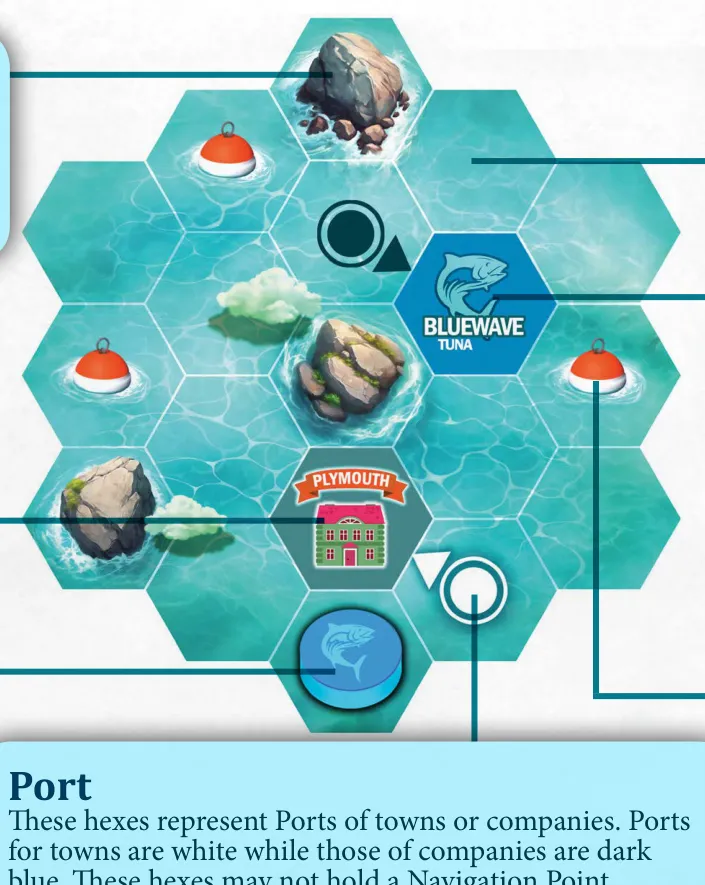
Each player sails one ship around four double-sided Sea Tiles. Town ports have changing container demands. Company ports let you load containers. Navigation Points laid on sea hexes form routes; the company that owns each point is paid when ships use it.
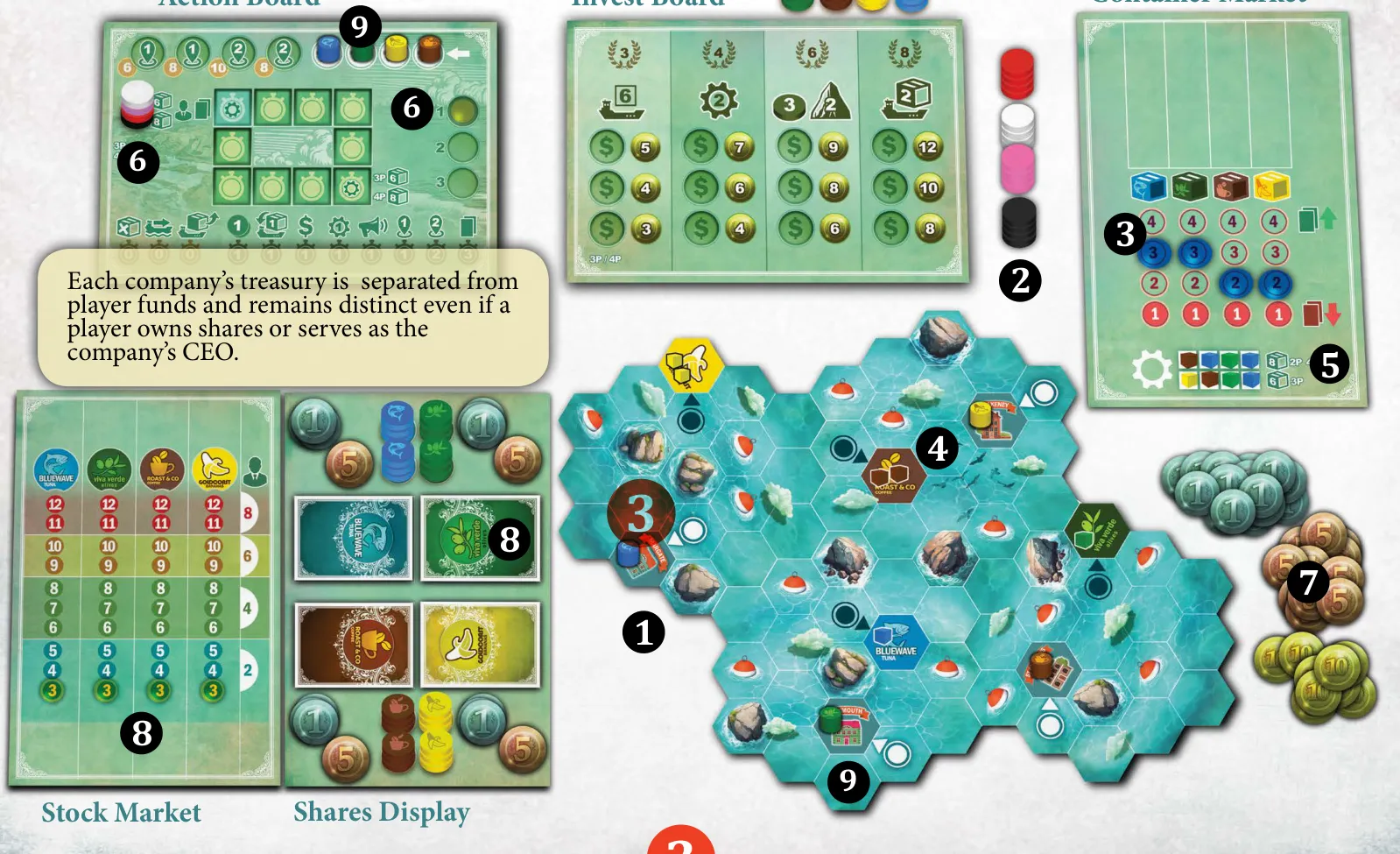
The Action Board has a circular Time Track, round spaces, initial bonus slots, changing town-demand slots and an action list. Company shares, stock prices, container values, investments and ship cargo are tracked on their own boards.
How the game ends
Rival Seas lasts three rounds. The player furthest behind on the Time Track acts. After each time-costing action, move your disc by its cost and resolve the action. Continue while you are last, or stop once you are no longer last. Stacked discs keep their order; the top disc in a last-place stack acts first.
Set Sail, Deliver Containers and Dump Containers are free actions. You may take them before or after time-costing actions while the turn rules allow. When an action lands exactly on Start, finish your free actions; then your round ends. You cannot take an action that would pass Start.
Container production is triggered when the first player’s disc reaches or passes halfway, and again when it reaches Start by exact count. In a two-player game there is no halfway production. At Start, the first player finishes free actions, then resolves one Company Payout. After all players reach Start, advance the round; after round three, score.
Ways to score
Score your personal credits, your shares multiplied by each company’s final stock value, VP from each unlocked investment, and containers left aboard your ship. Company treasuries are not personal funds. Most VP wins; ties go to the player with the most shares.
What each resource is for
Personal credits buy shares and investments and pay route tolls. Company credits pay for Navigation Points, shares sold back, CEO wages and dividends. Containers earn money when delivered and score one point each if left aboard. Shares affect both your control of a company and your final score. Navigation Points form the routes your ship needs.
Teaching tips
Show the six-hex route and the four company colors before explaining the stock market. Keep company money separate from personal money. The Gameplay page covers time and action costs; Shipping and Trade covers routes, deliveries and the container market; Shares and Investments explains company control and payouts.