Learn Movers & Shakers
Learn the game in 5 short steps. Everything links to the full rules.
What Your Company Is Building
Your company turns Contracts into Goods, rupees, and railway traffic. Keep contracts active by loading their Crates onto Freight Cars, then move trains to deliver the cargo or ship it. The Goods and investment engine pays at the end, so each turn balances immediate cash against long-term value.
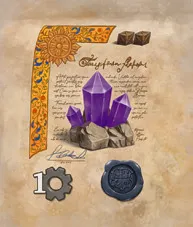
Contracts show their Good, type, required Crates, and reward. This is one sample face; the guide does not reproduce the full Contract deck.
Set Up Your Railway Company
Select a random player to choose first. Starting with that player, take ₹2, ₹3, ₹4, then ₹5 in selection order. Choose one of the five Setup cards together with its randomly paired Goods or Transaction token. The selected Setup card gives your initial Freight Car positions and starting benefits. Its letter also helps set first-round order.
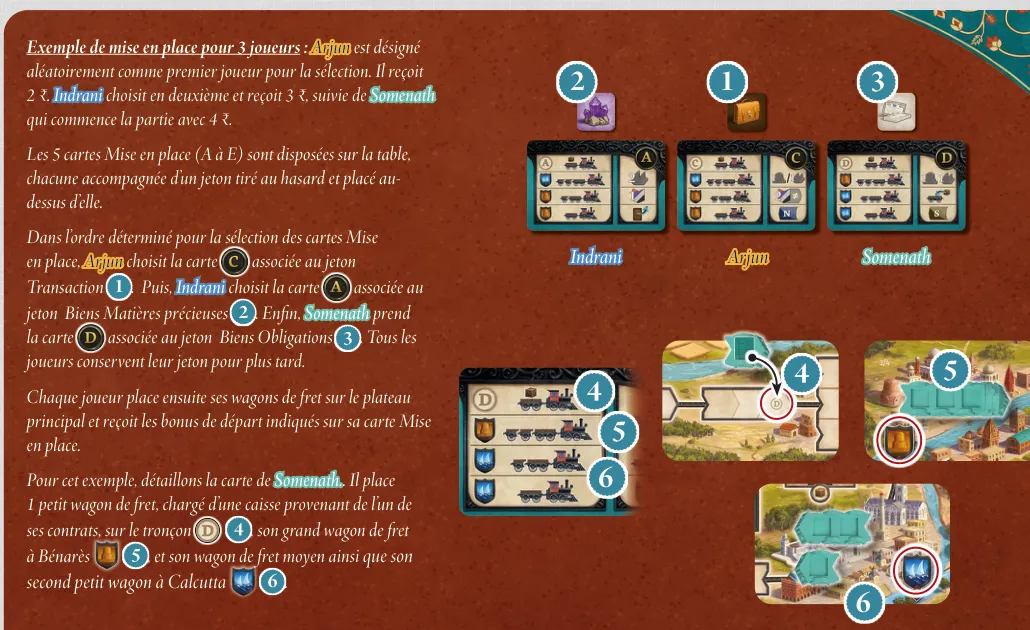
Use the same side of the Setup cards, selected at random. Follow the chosen card’s car positions and starting bonuses. Then sort players by the letters they selected: earliest letter goes first.
Fill Six Action Spaces
Each round, play six cards one at a time into your six Company spaces. A Load or Move card has a Development action and a Logistics action; the space has a matching pair of Company actions. Place the card so the Company action you want to take remains visible. Resolve the card and visible Company action in either order, completing one before beginning the other.
You may skip either action. Or give up all actions for the turn: place a card as usual and gain ₹3. At the end of your turn, replace each completed Contract with a new Contract of the same type.
Move Freight and Ship Crates
Load Crates from active Contracts onto eligible Freight Cars. A Small car needs 1 Crate, a Medium car at least 1, and a Large car at least 2 before it can move. Form a train in either city or move a train already on the railway. Trains can include cars owned by different players.
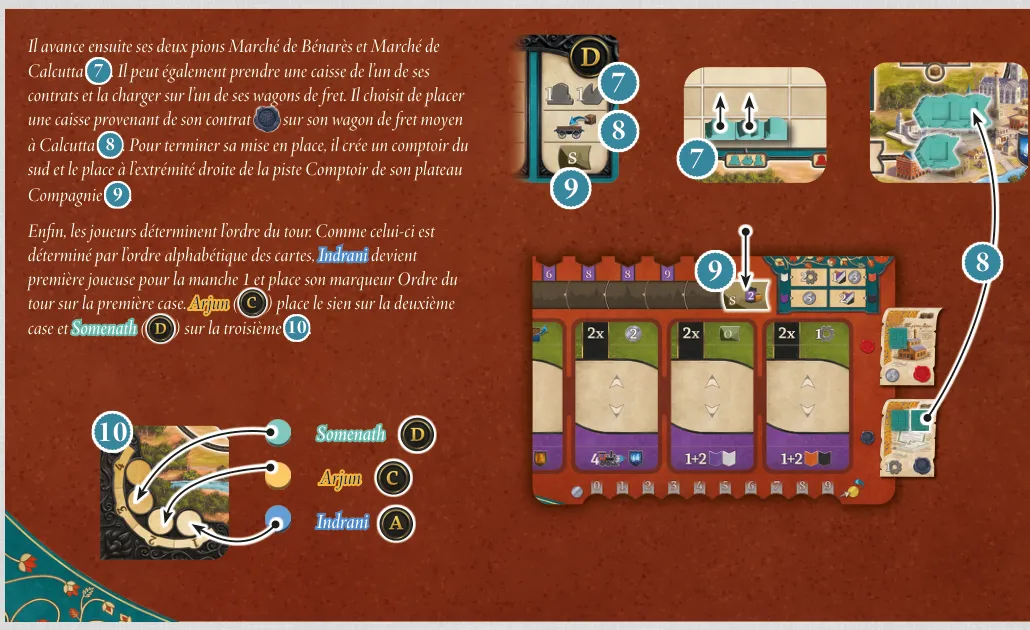
Push trains when a destination row cannot fit the arriving train. At junctions, trains may split; cars sharing a row must join. Delivering a car to a city empties its Crates and advances that owner’s Performance. Shipping a Crate earns the ship’s printed reward and can improve your next turn order.
Administer and Invest
After all six spaces are used, rank players by their Crates on the three Ships. Break ties by Ship I, then II, then III, then current order. The new first player gets a Transaction token and a Regional Trading Post; other players with at least one shipped Crate get a Transaction token.
Move Market pawns back for undelivered Crates, collect city delivery income, align all three Market pawns to the lowest one, then spend Profit discs on the Investment grid. In Round 2, Freight Cars still on the railway also earn based on car capacity and the junction reached. The second Administration phase ends the game and triggers scoring.